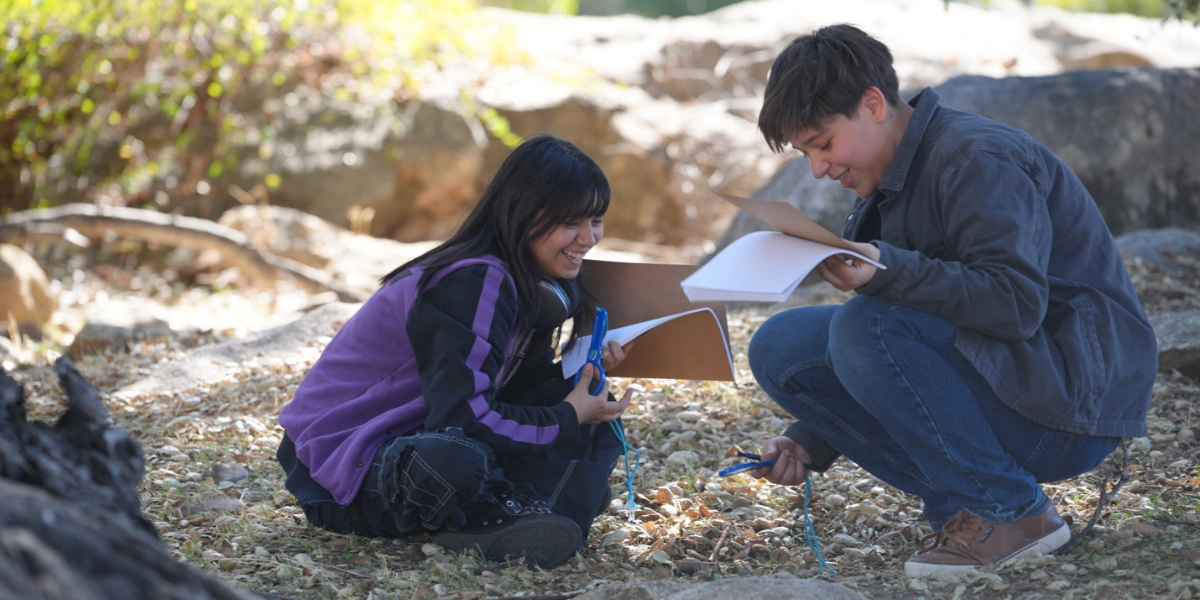
A student kneels in the dirt, holding up a small discovery – a bug, a feather, a piece of tree bark – and suddenly, their science lesson comes to life.
Moments like this are why Mike Strong, Co-Founder and Learning Designer of Blue Dot Education, does what he does. They remind him of his own curiosity as a kid – the one who couldn’t stop wondering what lived under the next stone.
“In some way, I never stopped being the kid who was really interested in bugs,” he said. “I can go to college for 50 years and earn all these different degrees, but I still like flipping over a rock and finding what’s underneath.”
That spirit of curiosity drives the collaboration between Blue Dot Education, EcoLogik Institute, San Diego Children and Nature, and Mountain Empire Unified School District. Through the Thrive Community of Practice (TCoP), supported by San Diego Foundation and its environmental outdoor access initiatives, these partners are helping teachers and students rediscover the joy of learning outdoors, especially in communities where access to nature isn’t always easy.
Nurtured by Nature
Time in nature supports more than a student’s mental health – it encourages exploration and wonder.
“Nature-based learning is the way to really connect youth to nature and to help them see themselves in those outdoor spaces,” said Samantha Wynns, Executive Director of the EcoLogik Institute. Still, outdoor education isn’t a standard part of most school curriculums. Many teachers want to take lessons outside but don’t always have the time, training or support to make it happen.
Rural districts like Mountain Empire Unified School District, which is nestled in the southeastern most part of San Diego County, face some of these challenges. The area’s arid, remote landscape – paired with limited infrastructure and funding – often means students have fewer opportunities for hands-on outdoor learning.
“There’s just not a lot of space in those budgets to take a chance on something new,” Strong said. “When we get to partner with Mountain Empire Unified School District, it’s a big deal. We can help create those experiences that might not otherwise happen.”
Nature’s Impact: Connecting Through the Outdoors
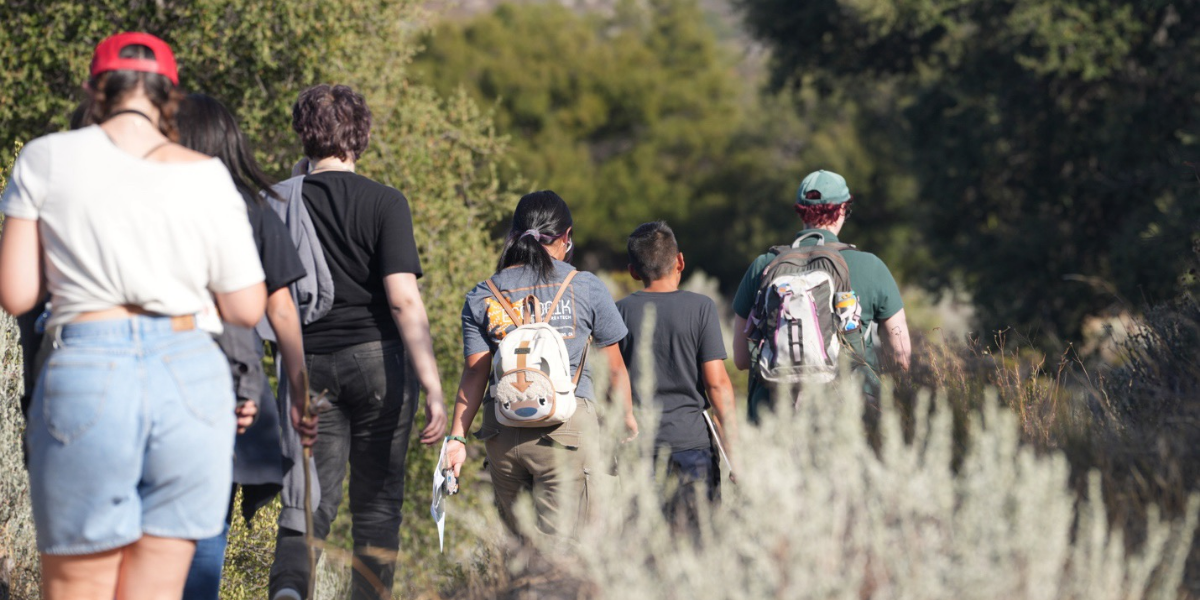
Through the TCoP, teams from Blue Dot, EcoLogik, and San Diego Children and Nature host teacher workshops, model outdoor lessons, and co-design experiences that tie classroom subjects to the surrounding environment – from photographing the outdoors to cultivating the school garden or exploring nearby trails.
“Rural schools are often extremely close to beautiful, relatively untouched spaces,” Strong said. “When students are given a chance to explore something and fill in spaces with honest questions and honest wonderings, some really powerful learning happens.”
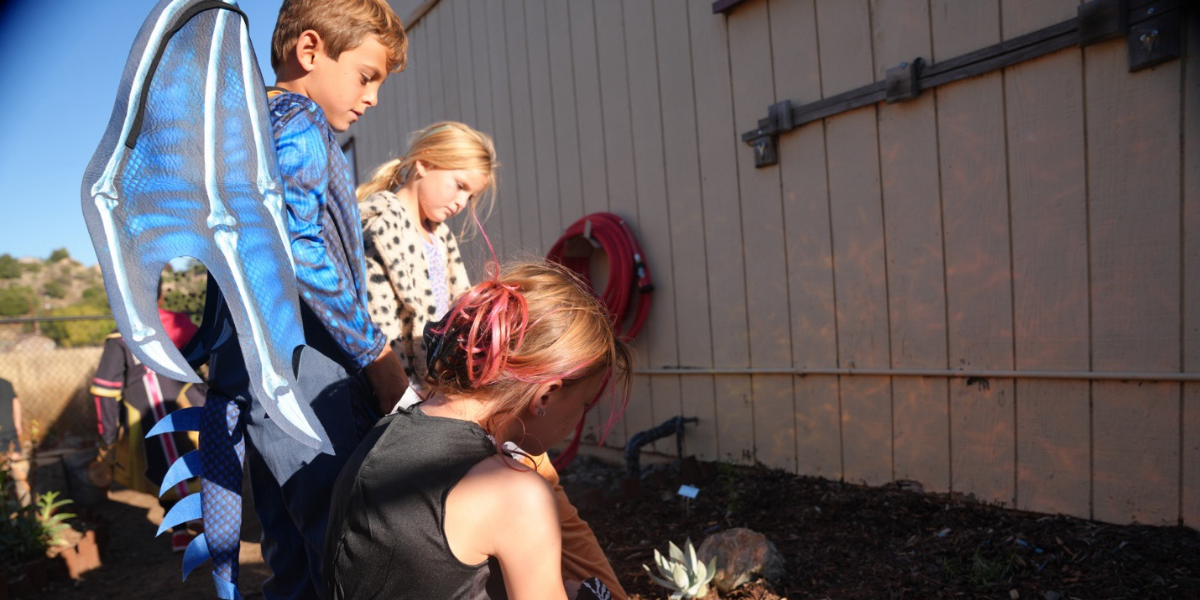
At Descanso Elementary, which is east of Alpine, a small garden now sits where weeds once took over. Students care for the plants in the garden, turning what was once an empty patch of dirt into a living classroom.
Strong recalled taking students on a short hike along the Pacific Crest Trail, which runs right past their school campus in southeast San Diego County. There, they spotted a red-tailed hawk nesting atop the stadium lights, the same bird that inspired their school mascot.
“Even if it’s a small touch like that,” Strong said, “it feels like we’ve contributed to the community in some kind of way.”
By sharing strategies and resources across organizations, this partnership helps educators build confidence to teach outside and make nature-based learning part of everyday instruction – creating learning opportunities that are as much about connection as they are about curriculum.
About Thrive Community of Practice
TCoP is a collective impact initiative funded by the Alumbra Innovations Foundation and designed to advance place-based environmental education, equity and career pathways.
The initiative brings together 11 community-based organizations and three school districts to co-design outdoor learning experiences rooted in environmental literacy. It focuses on youth furthest from opportunity, connecting them to nature, civic engagement and even in future careers in environmental and sustainability fields.