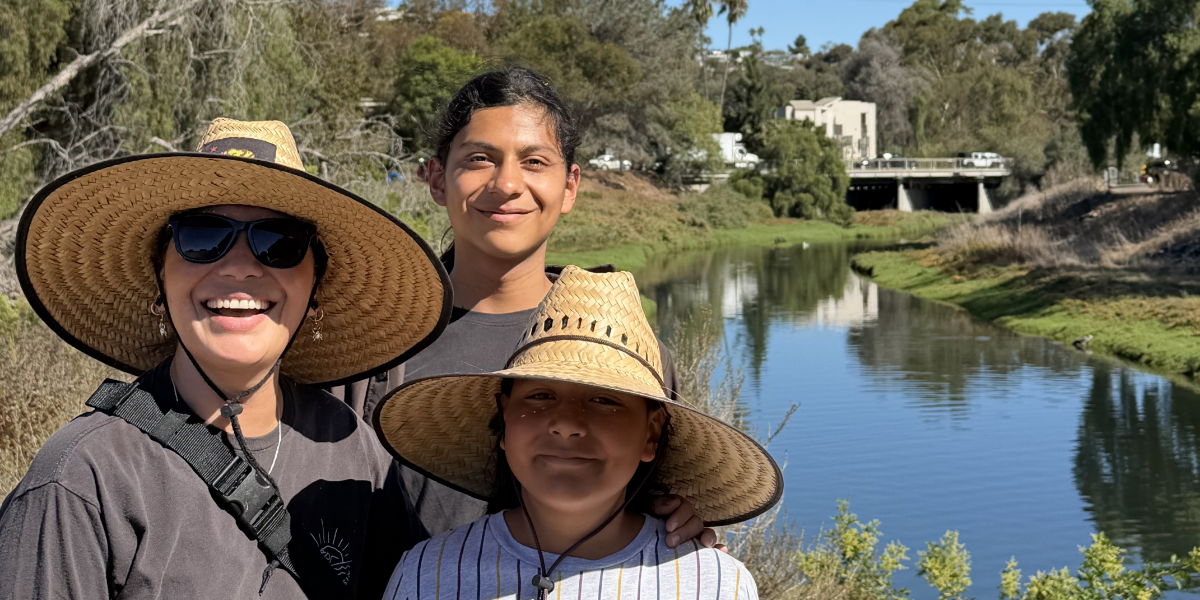
On a fall Saturday morning, Lorena Muñoz and her sons, Damien and Jahziel, were among 50 volunteers planting hummingbird sage, chaparral mallow and other native plants on the upper slopes of Rose Creek at Mission Bay, part of a community effort to beautify and restore the area.
“We’re standing right here looking into the creek, and we see all the fish in the water, and pelicans,” said Lorena, who drove nearly 60 miles to Rose Creek from Campo, a rural community in San Diego County near the Mexican border. “We’ve always been kind of connected to the environment around here, the natural plants, the animals. We thought that if we can help out at least in one little area, it’ll benefit everyone around.”
Rose Creek, the largest source of water flowing into the bay, has struggled with poor water quality, affecting the plants and wildlife that depend on it. Once lined with sycamore, willows and oaks, the creek was channelized in the last century and largely cut off from the marsh it fed.
Invasive plants now crowd its banks, taking hold in stormwater fill soil that’s challenging for native plants to take root in. San Diego Coastkeeper’s 2025 Mission Bay Water Quality Report found that Mission Bay was unsafe for swimmers and boaters at least half the time due to pollution in Rose Creek.
Native plants like the ones Lorena and her sons added to the area offer hope and a fix, because their roots help filter pollutants before they reach the bay.
ReWild Mission Bay and San Diego Bird Alliance Partnership
The San Diego Bird Alliance’s ReWild Mission Bay has been behind the effort to enhance and restore the natural wetlands in Mission Bay and was behind the fall planting event—the first of two community plantings made possible through a $16,555 grant from San Diego Foundation.
The grant supports a year of habitat restoration along the creek. It focuses on local community groups and schools, and the creek’s important role as a wildlife corridor.
San Diego Foundation works with nonprofit partners across the region on climate and the environment, including efforts to protect biodiversity, minimize local risks from climate change and encourage positive connections with our outdoors. Through its Outdoor Access initiatives, the Foundation also helps preserve outdoor spaces, increase access to the outdoors and support the next generation of environmental stewards.
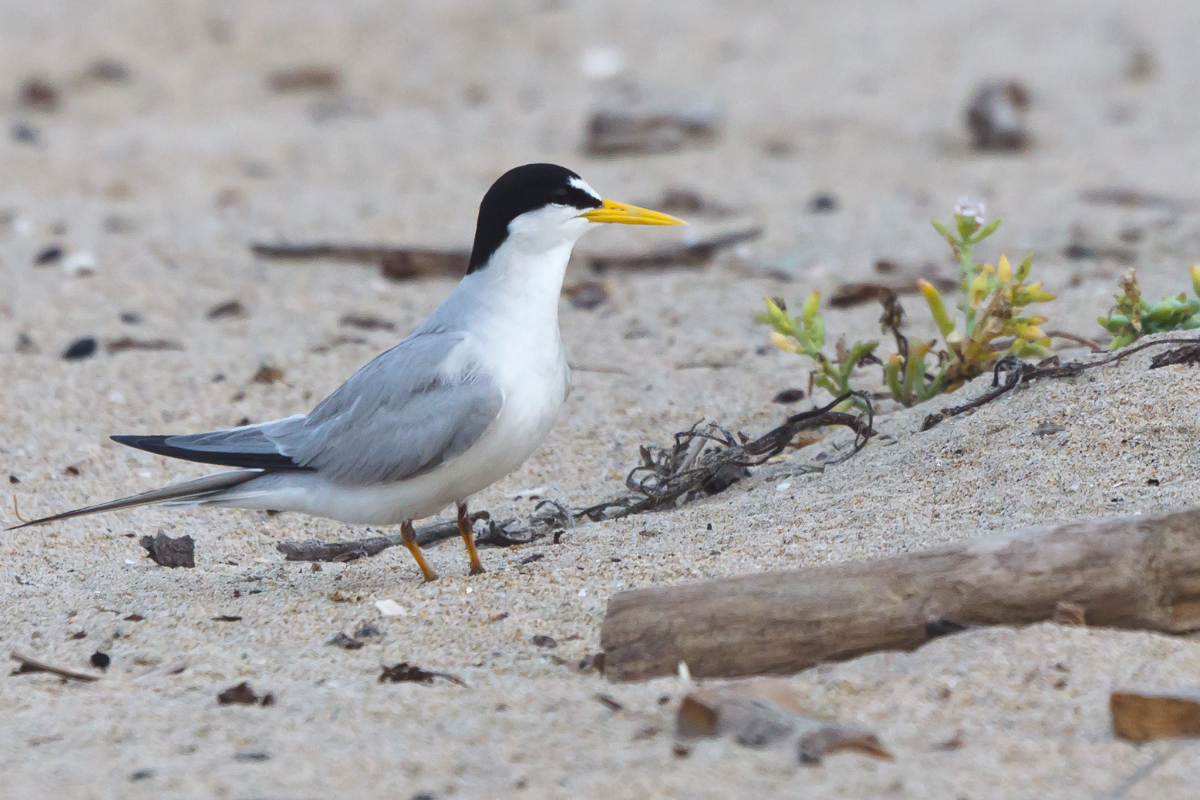
“This project is focused on habitat restoration, removing non-native plants that are useless to birds and other wildlife and planting natives that provide nectar, seeds, nesting sites, shade, and water quality filtration for Rose Creek,” said Andrew Meyer, director of conservation at San Diego Bird Alliance. “It also is helping us raise the voices of Kumeyaay partners and see their story and future in the signs and projects that the park shares with the public.”
Meyer said the grant has leveraged important funding for the group.
“We have just gotten the green light for the next phase of ReWilding wetland habitats in Mission Bay,” Andrew said, “and now this grant has helped us get three more years of funding to plan and improve Rose Creek.”
Built by Volunteers and Community Members
The plantings build on decades of work by Friends of Rose Creek, led by Executive Director Karin Zirk and a group of dedicated volunteers.
“A lot of the area looks naturalized now,” said Isabel (Izzy) Adams, Friends of Rose Creek’s native plant garden coordinator. “Almost every section between the Rose Creek Cottage and the Mike Gotch Bridge has been planted by her and Friends of Rose Creek. So now it looks like a beautiful natural wetland.”
Kelcy Coleman, San Diego Bird Alliance’s conservation and native seed library coordinator, said the group’s slogan sums up the stakes: “What happens in Rose Creek ends up in Mission Bay.”
Kelcy said that where the creek turns from salt marsh habitat to the riparian freshwater habitat, there are large invasive species including Mexican fan palm trees, pampas grasses and the giant reed Arundo.
“It would be extremely beneficial if the native plants were able to take over, because then our water would be filtered until the restoration portion is complete,” she said. “With more funding, we would be able to remove those larger species.”
The monitoring report published by San Diego Coastkeeper found that bacteria levels spiked at Rose Creek following rain events, with dangerous levels of phosphorus and zinc that harm human and ecological health.
Planting indigenous species is one way to help battle the bacteria.
“One of the ways to help the water quality is to plant native plants, and that’s mostly what Bird Alliance does,” Kelcy said. “The San Diego Foundation grant allows us to do that work, which is so important.”
Awareness is also part of the challenge.
Kelcy said that an informal survey by Friends of Rose Creek and its partners found that only one in 10 people nearby knew what Rose Creek was or where it was. The City of San Diego has put Rose Creek signs on bridges that cross it, and Mission Bay High School students have made a creek banner, Kelcy shared.
The restoration work will continue in 2027, with Indigenous youth participating in the second community planting along Rose Creek. San Diego Coastkeeper will also join the event to share information about water quality.
San Diego Bird Alliance has also worked with Kumeyaay community members on wetland restoration elsewhere in Mission Bay.
Welcoming More Neighbors
A separate $5,000 San Diego Foundation microgrant is helping Bird Alliance offer bilingual conservation activities.
The grant directly supports Bird Fest and BioBlitz events, giving more residents a chance to help document and care for the wildlife the creek supports.
“We’re grateful to the support we’re getting from San Diego Foundation, and their donors, because it’s letting us connect with the local community around Rose Creek, connect Rose Creek to Mission Bay and ReWild Mission Bay, and connect to the larger plans and resources Rose Creek needs to be providing habitat and fighting climate change 24 hours a day,” Meyer said.
Learn how San Diego Foundation is working with nonprofit partners to protect our natural resources, strengthen climate resilience and expand access to the outdoors. Explore our environmental initiatives.