For Ann Hunter-Welborn, philanthropy and environmental stewardship have always gone hand in hand. As a guiding force behind Hunter Industries, the San Marcos–based global irrigation company her family founded some 45 years ago, Ann has helped shape a corporate culture rooted in sustainability, community partnership and giving back.
That passion made Ann and Hunter Industries a natural partner for the Binational Resilience Initiative (BRI), a burgeoning alliance between San Diego Foundation and the International Community Foundation. Together, they are investing in environmental leaders along the Cali-Baja region, from Ensenada to Oceanside, through hands-on learning, cross-cultural exchange and joint climate action.
Investing in Youth Leadership
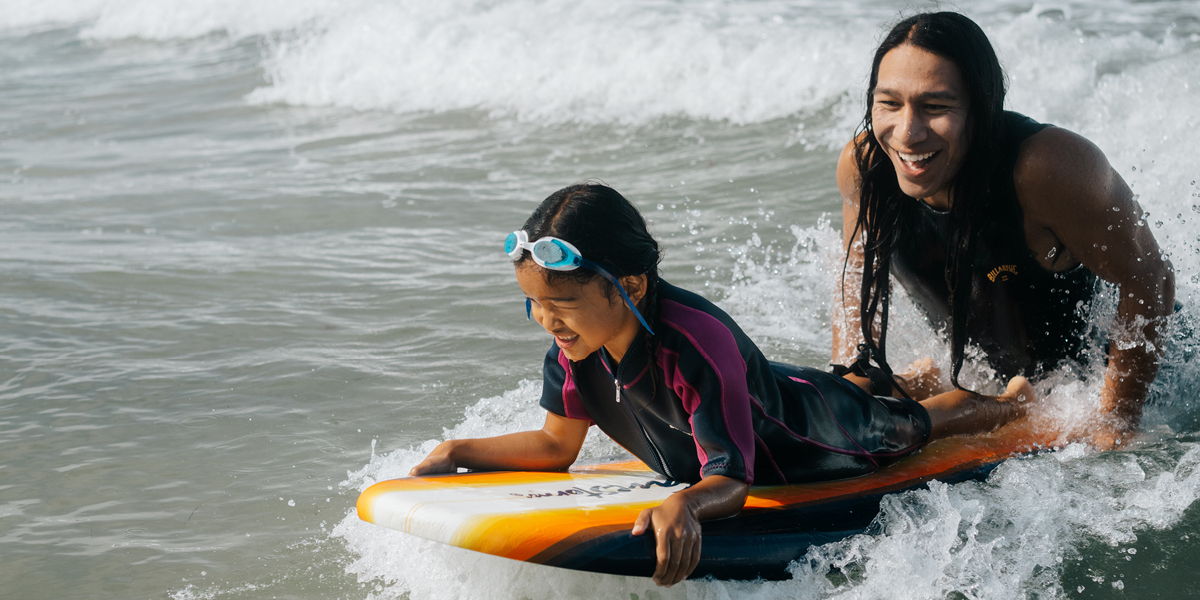
Among their proudest efforts is the Generación SEA: Binational Youth Climate Resilience Academy, a BRI-supported program launched by Ann and Hunter Industries. The Academy connects two youth-driven nonprofits, Tijuana’s Kilómetro Uno and San Diego’s Un Mar de Colores, in a shared mission: to bridge borders through climate education and environmental activism.
“This is really about bringing youth on both sides of the border together,” Ann explains. “We need shared understanding and collaboration if we want real impact.”
The stakes are enormous. The Cali-Baja region, home to roughly 7 million residents and generating $250 billion in regional GDP, faces serious climate challenges.
Philanthropy in Action
Hunter Industries’ long-standing commitment to corporate social responsibility laid the foundation for this work. The company’s Sustainability and Social Impact program embeds environmental ethics into every aspect of operations – from water-efficient innovations to corporate giving strategies.
That culture of care lives on through initiatives such as the Ann Hunter-Welborn Circle of Excellence Award, which annually honors customers and community partners advancing water conservation and sustainability.
Beyond the corporate sphere, Ann’s philanthropy has extended to organizations such as the Sonoran Institute and numerous conservation-focused groups. She was especially drawn to the Sonoran Institute’s cross-border work — including efforts in the Colorado River Delta and the polluted waterways near Mexicali — reflecting her belief that environmental stewardship must extend across boundaries.
Together, these commitments underscore her dedication to the environmental issues shaping our shared future.
“We want to be part of the solution,” she says.
Empowering the Next Generation
Hunter Industries’ binational presence, which includes a large manufacturing facility in Tijuana, uniquely positions the company to champion environmental education that crosses borders.
“We immediately wanted to do everything we could to support the efforts of the Binational Resilience Initiative when we learned about its mission,” says Warren Gorowitz, Hunter Industries Director of Sustainability and Social Impact.
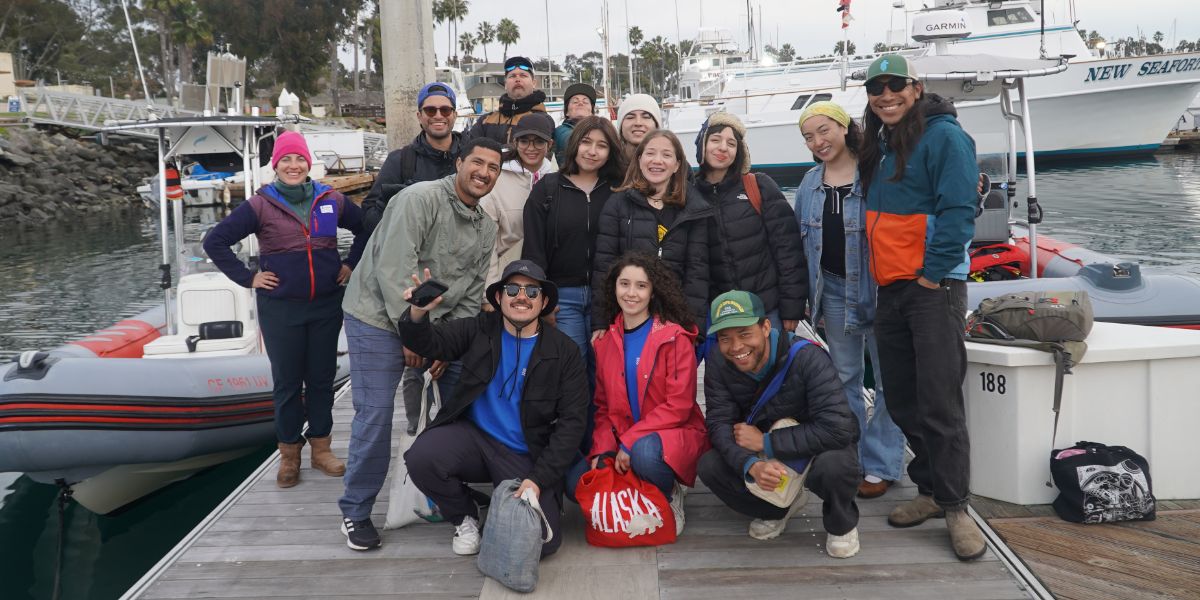
That’s happening through Generación SEA. Its initial cohort included 24 high school students from San Diego and Baja California (12 from each side) who met for 10 Saturdays in the fall of 2024, engaging in classroom sessions, outdoor fieldwork, and cultural exchange.
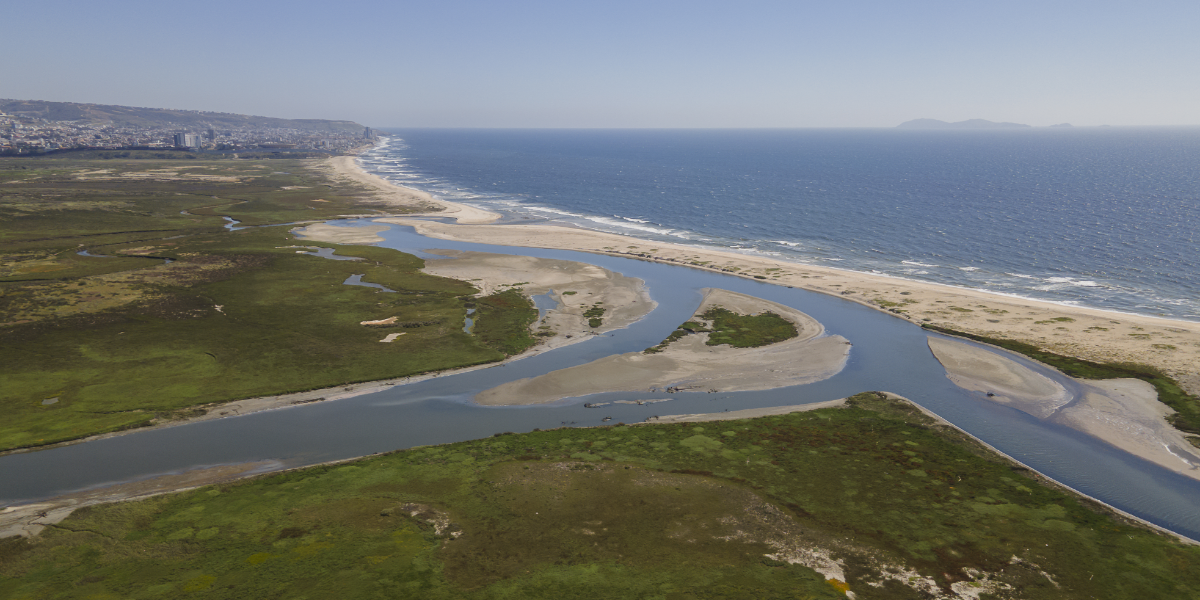
Tijuana River Mouth (Photo Credit: Surfrider Foundation and Veriditas Rising)
Participants surfed local beaches (many for the first time), observed birds, visited labs, and met scientists at institutions such as El Colegio de la Frontera Norte, Scripps Institution of Oceanography, Autonomous University of Baja California, The Birch Aquarium and the Tijuana River National Estuarine Research Preserve.
Their work deepened their knowledge of marine biodiversity, ecosystem restoration, and indigenous ecological wisdom — lessons that transcend borders.
Parents were encouraged to accompany their children on their Saturday trainings. “Not only were the students learning, but their parents were learning, too,” says Warren, adding that many parents are now recycling items at their home and picking up trash in their neighborhood.
Several Generación SEA alumni have already gone on to notable achievements: one earned a full scholarship to study marine biology at Boston University; another now studies at the Scripps Institution of Oceanography; and a Tijuana student represented Mexican youth at the UN Climate Change Conference (COP30). Several others have launched their own local sustainability projects.
Ann recalls being moved to tears at the Academy’s final presentations: “It was so inspiring to see those teenagers speaking English and Spanish together about their research. They saw themselves as one community working on shared environmental challenges.”
Continuing the Work
With funding in place for a second Generación SEA Academy in the spring of 2026, Ann and Hunter Industries remain steadfast partners in cultivating a more sustainable, resilient Cali-Baja. Their philanthropic leadership underscores a larger truth: the environmental challenges ahead demand collaborative, community-based solutions – and investing in young people is one of the most powerful places to start.
Says Mario Ordoñez-Calderón, Co-Founder and Executive Director at Un Mar de Colores:
“We are grateful for the contributions and commitment from Ann Hunter-Welborn, Hunter Industries, and the Binational Resilience Initiative, who are selflessly providing our region with an opportunity to show the world how two countries can work together to address the negative environmental impacts being brought on by climate change.”
To learn more about similar SDF initiatives, and how you can help, please visit our Climate and Environmental webpage.