Far too often, says Coastal Defenders Tribal Youth Advisor Blaine Mazzetti (Payómkawichum), Indigenous peoples have been an afterthought in the scientific study of their own lands. Also, for far too often, says Coach Jules Jackson, a Nanticoke water protector raised with traditional fishing, oystering and clamming practices on her ancestral Nanticoke Territories land, Indigenous science has been disregarded or ignored by the academic scientific community in its efforts to understand Indigenous lands and waterways.
Nanticoke translates in English to Tidewater People, which makes Coach Jackson’s research in San Diego wetlands and estuaries deeply personal as she can teach her ancestral knowledge to local Indigenous people, communities and nations. “As a guest on Kumeyaay Territories, it is my honor and privilege to support community priorities through sharing my knowledge as a Tidewater person. My favorite quote from my mentor Dr. Stan Rodriquez (Kumeyaay) is “Knowledge is not knowledge if it is not shared,” said Coach Jackson.
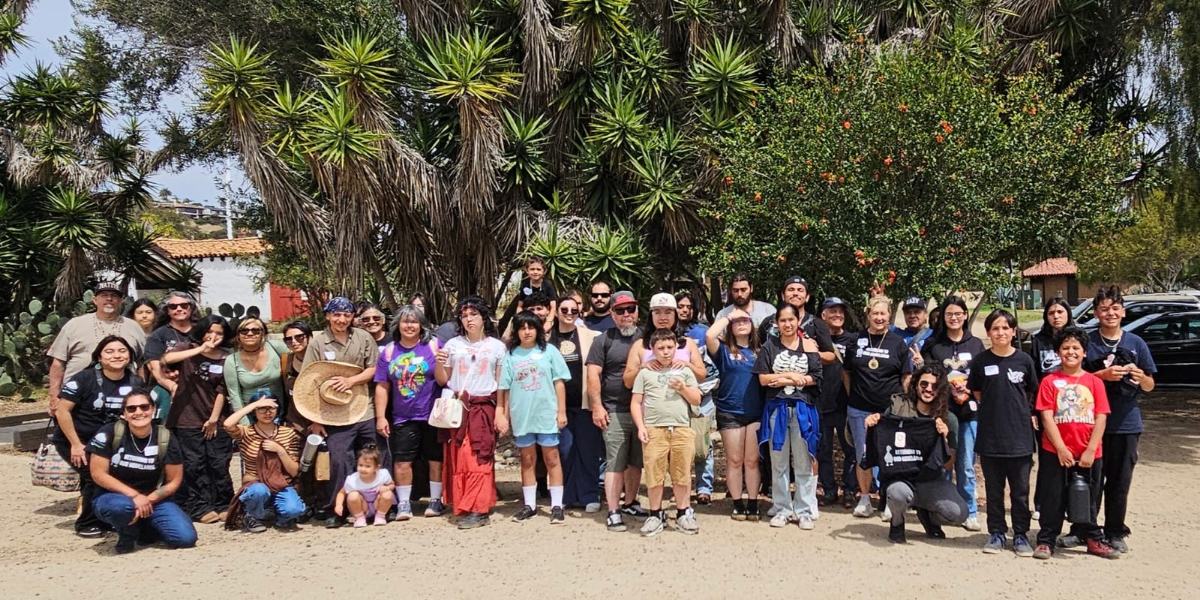
The lack of opportunities in Indigenous science are slowly changing in San Diego County thanks to organizations such as Coastal Defenders, a grassroots nonprofit founded by Coach Jackson that merges mentorship with climate science and Indigenous youth in STEM-based, career pathways through the Coastal Defenders Guardianship Pathway Indigenous Leadership Youth and Young Adults (ILY). For the past several years, she has worked with Blaine and Shandiin Armao (Diné) – who together have mentored dozens of the next generation of Indigenous youth and their families by developing curriculum in Coastal Defenders Knowledge Exchanges.
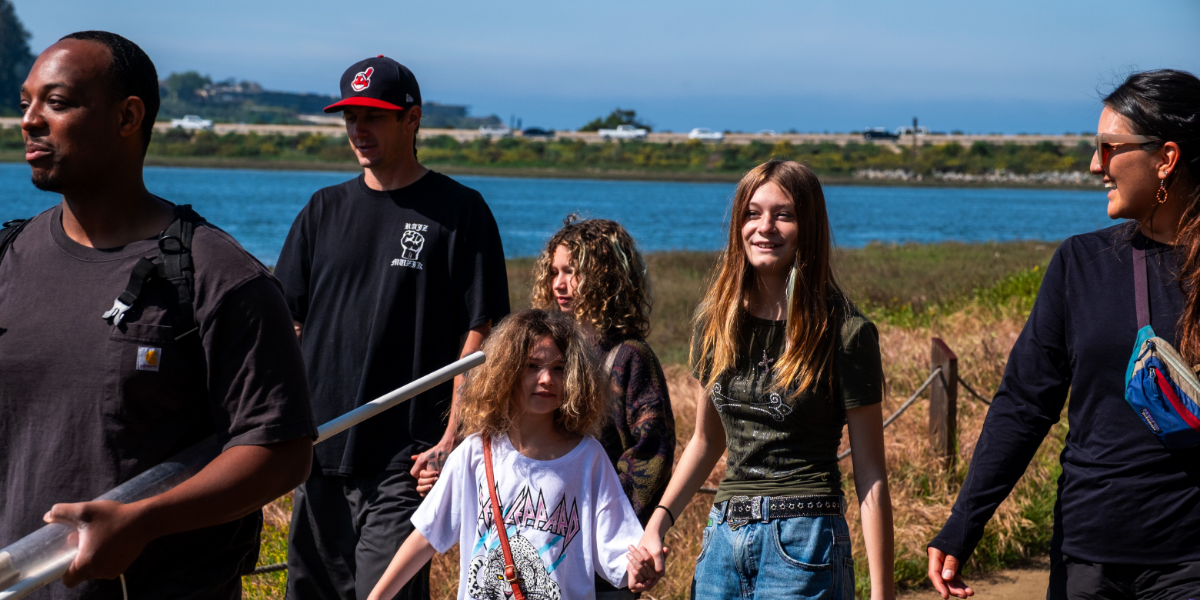
“I enjoy watching the youth come out here and work with the scientists; without Jules and Coastal Defenders, they would have not had that experience,” Blaine said.
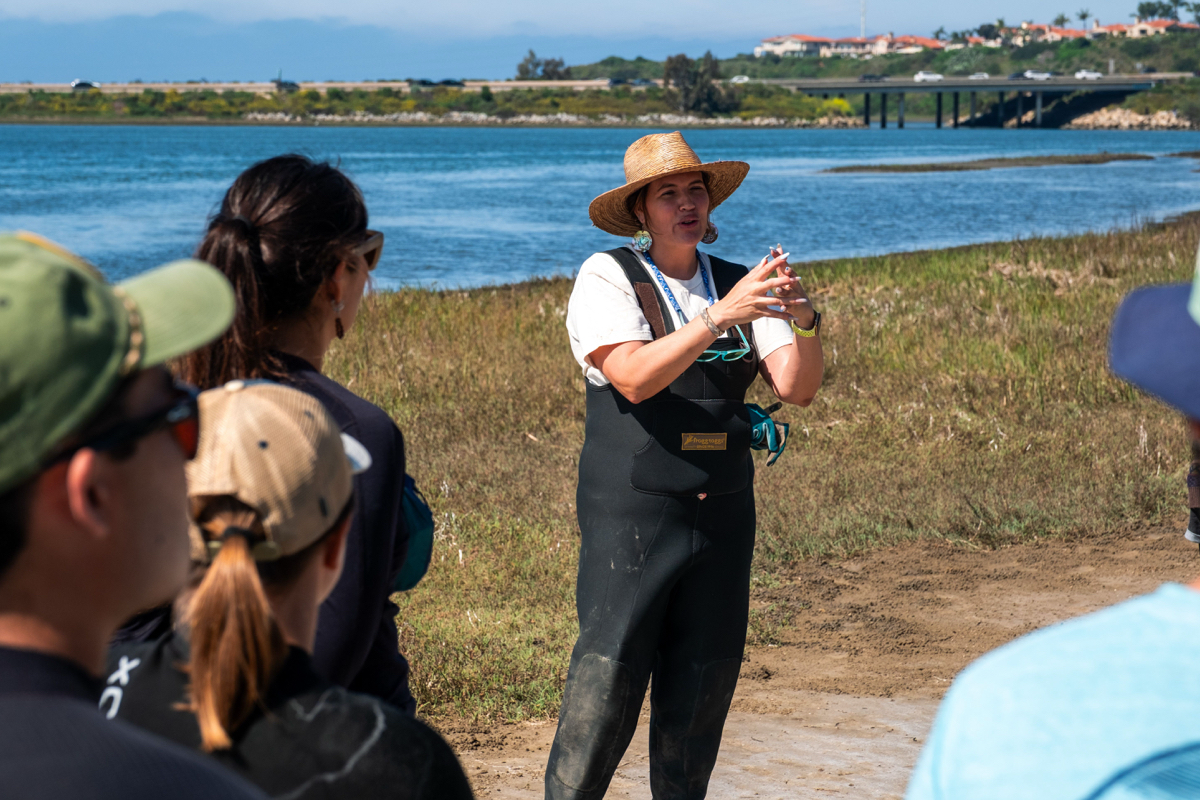
Coastal Defenders illustrates the impact of SDF’s Science & Technology Program’s Community Workforce Connections grant program. The nonprofit was among seven organizations—Access2Jobs, Black Tech Link, Elementary Institute of Science, Greater Than Tech, San Diego Futures Foundation, and San Diego Squared: SD2— sharing a total of $250,000 in the most recent round of Community Workforce Connections awards.
Community Workforce Connections grants are focused on boosting outreach and access to STEM career pathways while simultaneously supporting the strengthening of a skilled workforce in the San Diego region. The Coastal Defenders grant—made possible through the Reuben H. Fleet Foundation Fund at SDF—will support training for members of the community with skills that include Arc-GIS and participatory mapping. It also will fund research paper publication, scientific poster development and conference presentations.
Coach Jackson said the need for more Indigenous scientists, water safety professionals, and maritime operators is paramount. “No one is going to know the land and waterways more than the people who have been stewarding these eco-systems for thousands of years.” By connecting students with local research and monitoring opportunities, the grant program is providing real-world experience, building confidence, and nurturing professional relationships that can last well into adulthood.
Coach Jackson, a lifelong certified lifeguard and Water Safety Instructor, also shared that “water safety is an often overlooked skill set that we prioritize in training leading up to research and monitoring opportunities. We teach water safety skills from CPR/First Aid through flotation techniques, swimming, snorkeling and SCUBA diving with our partners at the Scripps Institution of Oceanography Dive locker, Center for Marine Archaeology, CARES team and SoCal Black Divers.”
A Collaboration of Partners
Coastal Defenders is not flying solo; rather, it’s collaborating closely with the Jen Smith Lab as Co-Principal Investigators in Kelp Thermotolerance and Population Variability of Southern California Kelp and supporting training in the Tribal Intertidal Digital Ecological Surveys (TIDES) program, a partnership between the Tolowa Dee-ni Nation and Scripps Institute of Oceanography to document climate change and sea level rise.
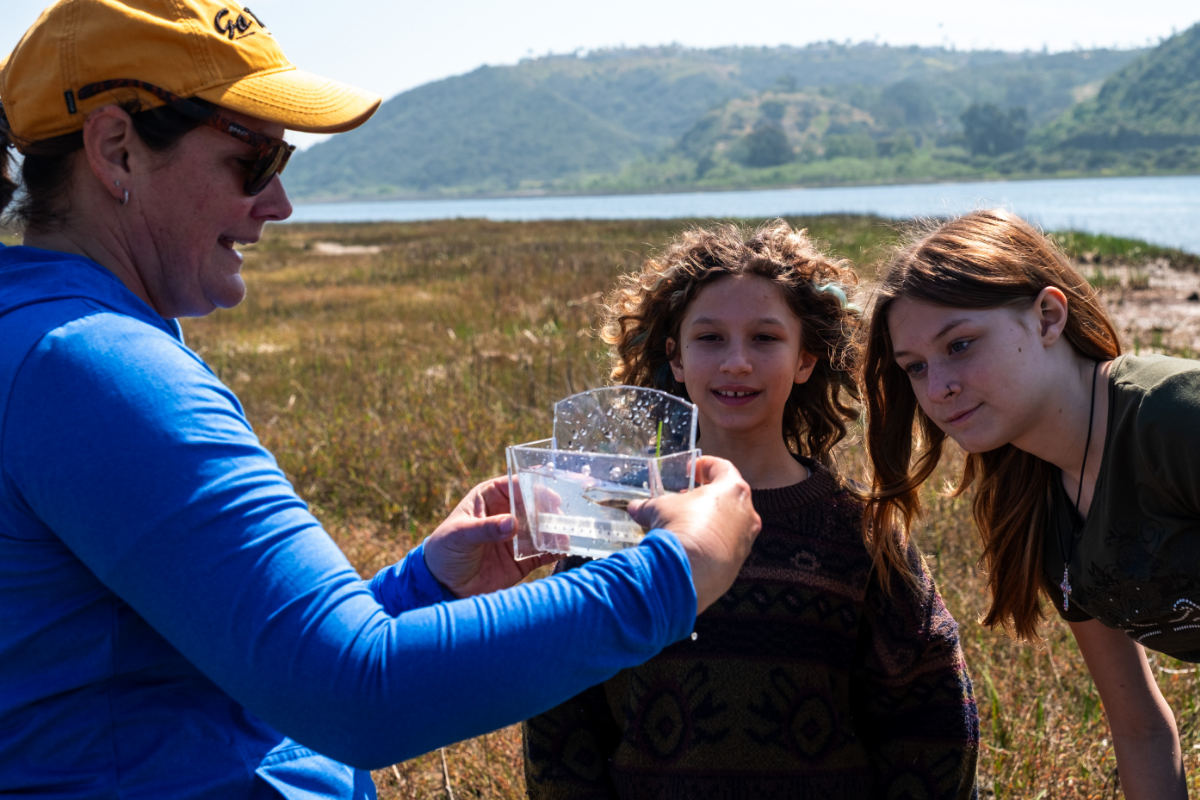
Said Christine Whitcraft, professor of biological sciences at Cal State Long Beach who also partners with Coastal Defenders: “I’m a firm believer that a sense of place roots all that we do as people, and there are many ways of knowing a place. We (academia) come at it from an academic, very formulaic, monitoring framework, but if we just had that counting, measuring, approach to it, we wouldn’t capture everything the ecosystem has to tell us. We really wouldn’t understand the place. So having traditional and Indigenous knowledge really builds our sense of place and also ensures that we understand the complete wetland ecosystem.”
Coach Jackson shared the project will yield a modern, visual, historical record-keeping database via hundreds of thousands of underwater and coastal photographs through underwater photogrammetry and Arc-GIS technology while inspiring the next generation of wetland ecologists. “We’re grateful to San Diego State University ecology graduate student and Coastal Defenders Science Advisor Xavius Boone for tracking through the muddy waters of Batiquitos Lagoon to deploy GoPro cameras that we are able to use for research into estuarine fish population dynamics and habitat use patterns.”
The impact of this research has the potential to be profound. San Diego County is home to 18 Indigenous reservations—the most in any county in the United States—yet none exist along the coast. Coastal Defenders is among those leading the charge to help raise cultural competency at academic institutions and create equal or greater valuation of Indigenous science.
“What makes TIDES unique is that it merges Indigenous science with academia, and sets the example of equitable collaboration based in data sovereignty principles,” said Coach Jackson.
Honoring History
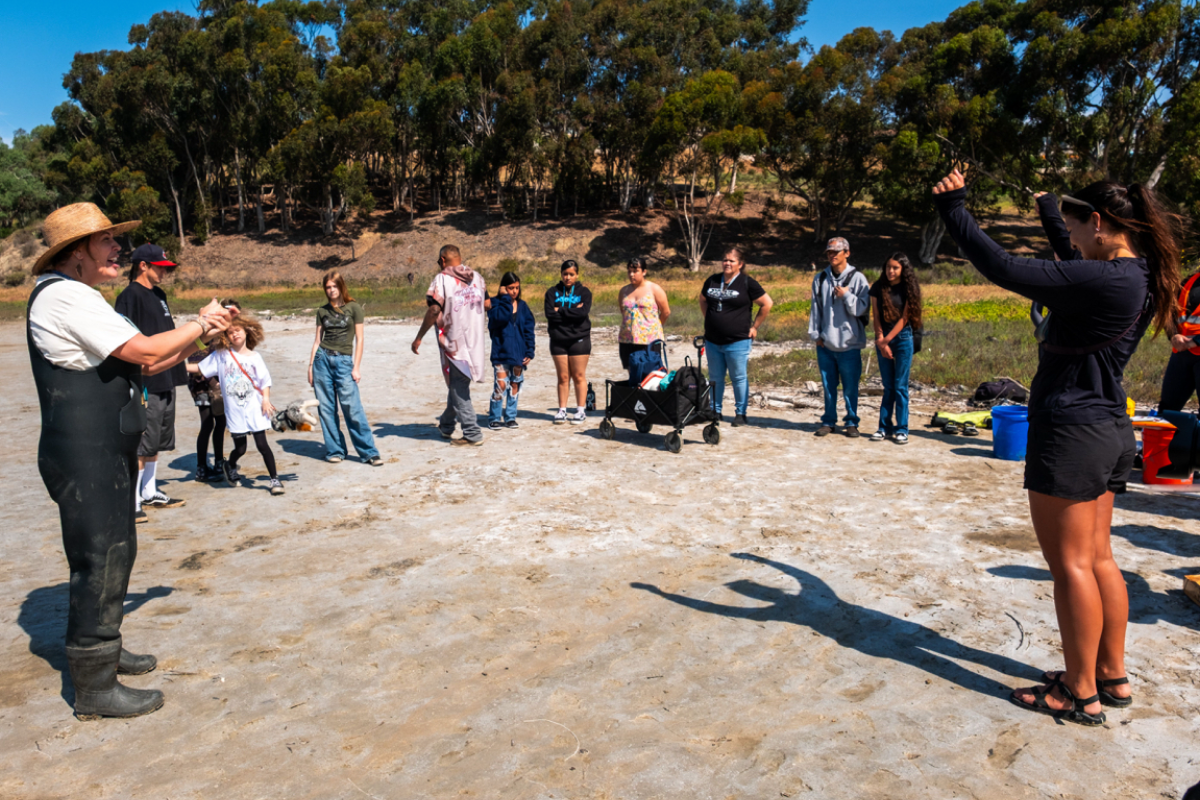
Coach Jackson is not new to this kind of work. Her foray into merging Indigenous science into academia began as an undergrad at Villanova University, where she founded the campus Native American Student Association—now the Native Indigenous Student Association. Although Villanova sits on the ancestral homeland of the Lenni-Lenape people, she found no Indigenous staff, no Indigenous faculty, and no Indigenous curriculum while she was there.
She’s been on a mission ever since.
“Everybody is talking about protecting our planet which is great. A significant part of healing our planet must be re-connecting people to place,” Coach Jackson said. “When people are displaced, we can never truly be in balance and if Indigenous people are not a part of the scientific process, the science will always be incomplete.”