
Save the Date: 2026 Professional Advisors Symposium
The Evolving Role of the Professional Advisor: Changing Client Expectations
Join San Diego Foundation and fellow professional advisors for an afternoon of insight, strategy and connection as experts across legal, tax, fiduciary and financial disciplines discuss emerging trends in client service, charitable planning and complex assets.
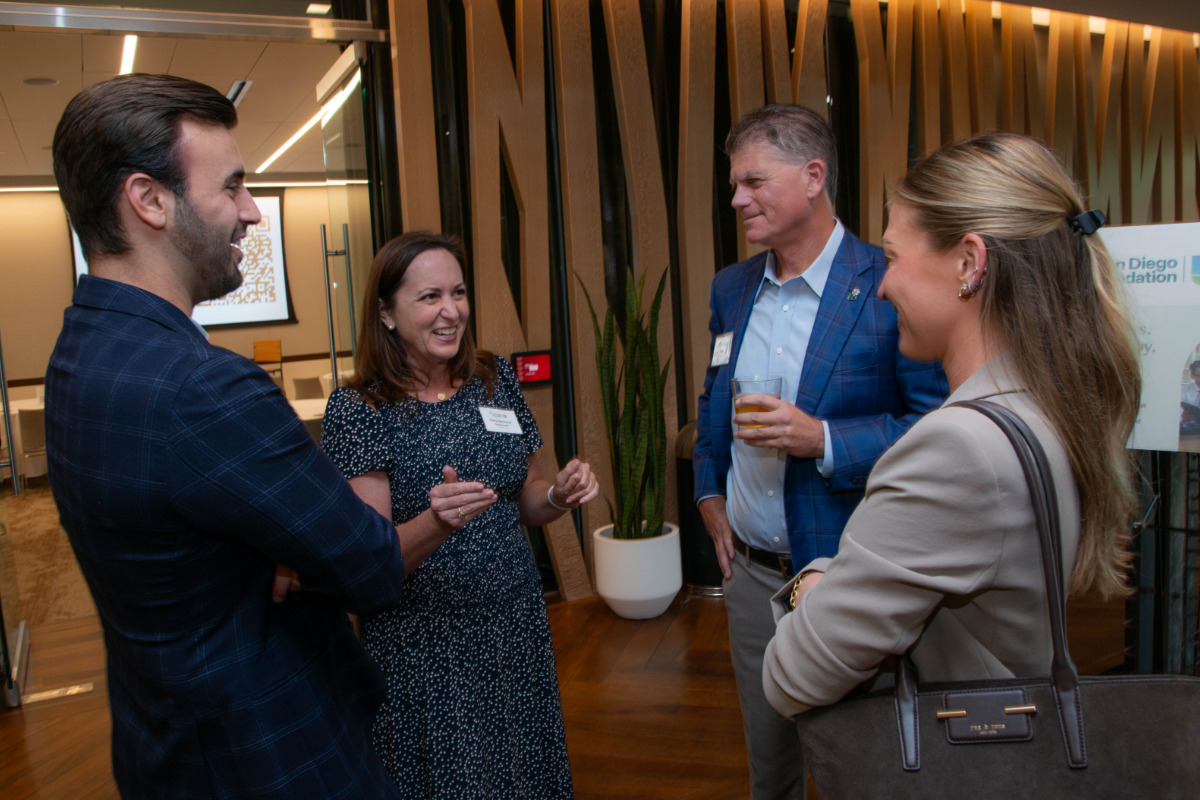
Wednesday, October 7, 2026
12:30 to 5:30 p.m. PT
Farmer & The Seahorse – The Americana Room
San Diego, CA
Two hours of continuing education credit available (MCLE, CFP®, CPE and PFEC). Lunch and parking provided.
Formal invitation to follow.
Summer is a natural time to revisit what clients truly value, and charitable giving is often part of that conversation. This month, we’re exploring three planning strategies that can open the door to deeper conversations and more tax-smart outcomes for your clients.
Unusual non-cash assets can make great gifts to charity
As you help your clients plan their charitable giving strategies, take a look at opportunities for clients to make unusual non-cash gifts, including classic cars, boats, RVs and even aircraft. Many clients hold substantial wealth outside traditional investment portfolios, and these assets can create unique charitable planning opportunities when approached thoughtfully.
Split-interest charitable gifts: Need-to-Know FAQs
Many attorneys, CPAs and financial advisors are diving deeper into understanding split-interest gifts. These include charitable gift annuities and charitable remainder trusts, which can help advisors find ways for clients to balance their financial and income planning with charitable goals. Understanding how these vehicles differ can help advisors identify which conversations may warrant a deeper charitable planning discussion with San Diego Foundation.
Retirement Plans and Charitable Giving
The momentum around Qualified Charitable Distributions (QCDs) keeps rolling forward. What’s more, proposed legislation could make QCDs available through additional retirement accounts, creating even more opportunities for clients to support the causes they care about while advancing tax and retirement planning objectives.
As always, San Diego Foundation is a resource—before, during and after these conversations.
Getting creative: Unusual non-cash assets can make great gifts to charity

If you are like many advisors, you may have discovered that charitable giving conversations often begin, and end, with cash or appreciated stock.
And of course, appreciated stock can be an excellent choice for clients to fund a donor-advised or other type of fund at San Diego Foundation because it may avoid capital gains tax while also possibly triggering eligibility for a charitable deduction at fair market value.
But for some clients, especially business owners, collectors and affluent retirees, valuable assets may take a different form entirely. Boats, airplanes, cars, RVs and other tangible property can represent a mixed bag of characteristics: significant wealth, ongoing maintenance costs and emotional attachment, all of which may add up to a charitable giving opportunity. These situations may no longer be one-off cases.
Here are four tips to consider as you work with your charitable clients.
Always reach out to San Diego Foundation
Anytime you are working with a charitable client, it can be helpful to explore the client’s options early. Clients may be surprised to learn that public charities such as San Diego Foundation can accept a wide range of non-cash assets, provided the assets can be evaluated, valued, transferred and ultimately liquidated to support the client’s charitable goals.
Ask questions beyond balance sheet basics
Clients may forget to mention highly appreciated non-cash assets. As they prepare for a meeting, they are often focused on investment statements and real estate information, not classic cars, RVs, planes or boats. Comprehensive conversations are especially timely as many affluent households continue to hold substantial wealth outside traditional investment portfolios. Recreational assets purchased years ago may now hold significant value while also generating ongoing expenses, storage concerns and succession-planning questions. Clients who are downsizing or simplifying during retirement may welcome charitable strategies that transform underused assets into community impact.
Build your client’s charitable plan prior to a sale
When you spot unusual assets on a client’s balance sheet and know the client is charitable, it is important to consider the possibilities. A client preparing to sell a classic car or boat, for example, could incur significant capital gains tax if the asset has appreciated in value. Contributing the asset to a fund at San Diego Foundation before a sale may help reduce or eliminate those taxes while also generating funds to support charitable causes the client cares about.
Pay attention to the rules
Gifts of non-cash assets require careful coordination. Unlike publicly traded securities, these assets involve additional due diligence. Title transfers, appraisals, environmental reviews for real estate, insurance considerations, debt obligations, marketability and liquidation logistics all require attention. The IRS also imposes specific substantiation and reporting requirements for charitable deductions involving non-cash gifts.
San Diego Foundation can work alongside you and your clients’ other attorneys, CPAs, valuation experts and financial advisors to determine whether a proposed gift is feasible and which structures might be best. In many cases, SDF can accept the asset and facilitate its sale. For a charitable client, using a much-loved car collection, boat or other luxury asset to support favorite causes and address community needs may be far more appealing than watching the asset sit in storage for years with no end to the maintenance costs. Advisors can add tremendous value by helping clients consider whether highly specialized collections and other passion assets are better suited for charitable planning than for transfer through an estate, especially when heirs may not share the same interest in maintaining or managing them.
Split-interest charitable gifts: Need-to-know FAQs

As charitable planning conversations become more sophisticated, many advisors are revisiting so-called split-interest gifts to help clients balance philanthropic goals with income needs. Two of the most common strategies, a charitable gift annuity (CGA) and a charitable remainder trust (CRT), can both provide clients with lifetime income while ultimately benefiting charitable causes. Despite their similarities, the two vehicles function very differently and may serve distinct client needs. Unless your practice specializes in charitable giving, you may not have the rules for CGAs and CRTs at your fingertips. Here are six FAQs to get you started.
What do CGAs and CRTs do for a client?
At a high level, both a CGA and a CRT allow a client to make an irrevocable charitable gift while retaining an income stream for life or for a term of years. In both cases, a client may qualify for an immediate charitable income tax deduction, and a portion of future payments may receive favorable tax treatment. In short, people use CGAs and CRTs to save taxes, make a gift to charity and create an income stream.
Which is easier: a CGA or a CRT?
A charitable gift annuity is generally the simpler of the two arrangements. The client transfers assets to a charitable organization in exchange for a fixed lifetime payment backed by the charity’s general assets. Because the payout is fixed and administration is relatively straightforward, CGAs often appeal to older donors seeking predictability and simplicity. Note that not every charity offers a CGA option. Many smaller or mid-sized nonprofits do not have the resources, licenses or state registrations needed to manage them.
Which is more flexible: a CGA or a CRT?
A charitable remainder trust offers considerably more flexibility than a CGA, but it is also more complex. A CRT is a separately administered trust that pays income to one or more beneficiaries before the remaining assets eventually pass to charity. Unlike a CGA, a CRT can be designed in different ways. A charitable remainder annuity trust provides fixed annual payments, while a charitable remainder unitrust pays a variable amount based on a percentage of the trust’s annually revalued assets.
Which option is better for clients contributing larger assets?
CRTs are often better suited for clients contributing larger or more complex assets. Because the trust can sell appreciated assets without triggering immediate capital gains tax within the trust, CRTs are frequently used with highly appreciated real estate, concentrated stock positions or even business interests prior to a sale. CRTs can also accommodate multiple beneficiaries, customized payout structures and professional investment management strategies. Clients who want greater flexibility, longer-term wealth planning opportunities or inflation-sensitive income may prefer a unitrust structure over the fixed nature of a CGA. That flexibility, however, comes with added responsibilities, including formal trust administration, annual tax filings, ongoing investment oversight and legal drafting.
When is a CGA better?
Clients who want to take advantage of the one-time “Legacy IRA” election created by the SECURE 2.0 Act may find that a CGA is better suited to their needs. The cost of setting up and administering a CRT may not be worth it because the limit for these transactions is $55,000 per person in 2026.
What is the first step in exploring CRTs and CGAs?
As always, San Diego Foundation can be a helpful first call when charitable giving comes up in a client conversation. If you are exploring CGAs and CRTs, SDF can help point you in the right direction so you can evaluate the rules for each technique and review key questions related to the client’s situation, including the type of asset funding the gift, the size of the proposed contribution, income goals, the number of beneficiaries and cost concerns. Charitable giving conversations are not limited to ultra-high-net-worth households. Many clients today are seeking ways to create reliable retirement income while also making meaningful charitable commitments, and split-interest gifts can help accomplish both objectives simultaneously.
Good news keeps coming: Retirement plans and charitable giving

Qualified Charitable Distributions continue to gain traction as one of the most practical and effective charitable planning tools for clients over age 70½. By allowing eligible clients to transfer funds directly from an IRA to a qualified charity without recognizing the distribution as taxable income, QCDs can help reduce adjusted gross income while supporting charitable priorities. For many clients — especially those who do not itemize deductions — a QCD is particularly appealing.
What is especially notable is that Congress has expanded planning opportunities in recent years by indexing annual giving limits for inflation to $111,000 per person in 2026 and allowing certain one-time QCDs, sometimes called “Legacy IRAs,” to fund charitable gift annuities and charitable remainder trusts. The June Embolden source also notes proposed legislation known as the Charity Parity Act that would, if enacted, extend QCD treatment beyond IRAs to include certain employer-sponsored retirement plans.
Consider a typical client scenario. A client age 74 is taking required minimum distributions from a traditional IRA. Because the client claims the standard deduction, charitable gifts do not generate additional tax savings. By instead directing a portion of the RMD to a qualified charity as a QCD, the client can satisfy part or all of the RMD obligation without increasing taxable income. In many cases, this can also help reduce Medicare premium surcharges and lessen the taxation of Social Security benefits, creating planning advantages beyond the charitable deduction itself.
Here are three examples of how San Diego Foundation can help a client achieve charitable goals through QCDs:
Support broad community needs through a designated fund or SDF programs and initiative
A client directs a QCD from an IRA to San Diego Foundation’s funds, including designated funds or SDF programs and initiatives. The client satisfies part or all of annual RMD requirements while supporting flexible grantmaking that addresses changing priorities in the region.
Support a cause area through a field-of-interest fund
A client uses a QCD to contribute to a field-of-interest fund at San Diego Foundation focused on causes such as education, health care, the arts or environmental conservation. This allows the client to support a specific area of passion while relying on SDF’s expertise to identify effective nonprofit organizations over time.
Support a favorite organization or students through an existing fund
A client makes a QCD to an existing designated fund or scholarship fund held at San Diego Foundation. For example, the client may support a favorite local nonprofit through a designated fund or help students pursue higher education through an endowed scholarship fund, all while reducing taxable income through a QCD.
Keep in mind that charitable giving with IRAs goes beyond current gifts. As part of advising clients about retirement assets, it is worth reviewing beneficiary designations. Naming a fund at San Diego Foundation or another public charity as the beneficiary of an IRA may be tax advantageous, and it can also help clients avoid administrative problems later. For attorneys, CPAs and financial advisors, developments related to QCDs are worth watching closely. QCDs increasingly serve as a natural connector among retirement planning, philanthropy and legacy conversations, and they often open the door to broader planning opportunities.
Learn More
For more than 50 years, we have worked with an extensive network of wealth advisors, estate planning attorneys, tax planners and other financial advisors to help high-net-worth clients and families achieve financial planning objectives and charitable giving goals while maximizing tax deductions.
If you want to learn more about customizing charitable solutions that match your clients’ needs, contact me at (858) 245-1508 or [email protected].