
Save the Date: 2026 Professional Advisors Symposium
The Evolving Role of the Professional Advisor: Changing Client Expectations
Join San Diego Foundation and fellow professional advisors for an afternoon of insight, strategy and connection as experts across legal, tax, fiduciary and financial disciplines discuss emerging trends in client service, charitable planning and complex assets.
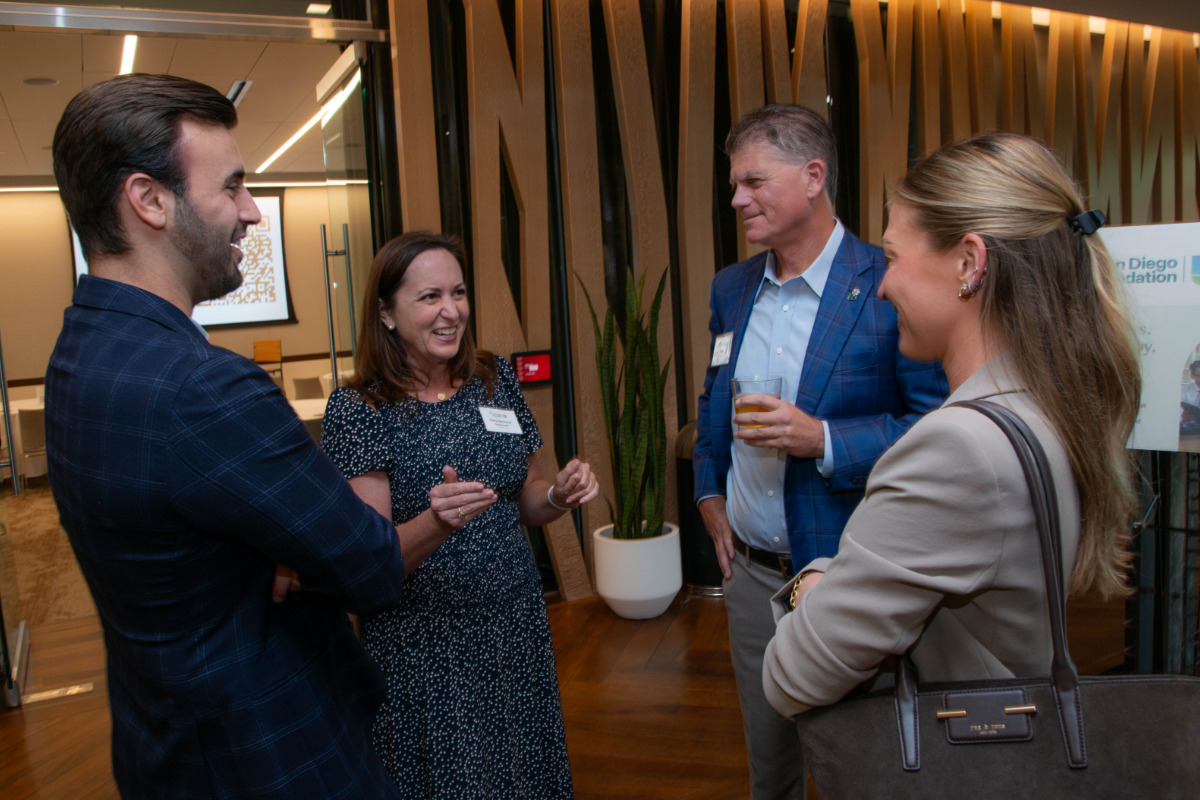
Wednesday, October 7, 2026
12:30 to 5:30 p.m. PT
Farmer & The Seahorse – The Americana Room
San Diego, CA
Two hours of continuing education credit available (MCLE, CFP®, CPE and PFEC). Lunch and parking provided.
Formal invitation to follow.
Summer may bring a different rhythm, but many advisors are already navigating liquidity events, business transition planning and early year-end conversations. This month, San Diego Foundation is sharing three timely topics to help you spot charitable planning opportunities, stay current on broader philanthropy trends and bring charitable intent into business succession discussions earlier.
- IPOs and charitable clients: Three scenarios for impact
- Backdrop required: Informing your work with charitable clients
- Business succession planning: Four questions and one word of caution
- Worth a read
IPOs and charitable clients: Three scenarios for impact

If you keep an eye on initial public offerings, it’s been an active few weeks, especially if your clients are involved. As you work with clients who may hold stock that’s going public, or clients who are considering investing in companies tied to IPO activity, be sure to look at all angles of the client’s financial and estate plan that may be impacted, including charitable planning.
Recent headlines about SpaceX millionaires, a potential new IPO wave and newly wealthy employees all point to the same theme: Liquidity events can quickly turn founders, executives, early employees and investors into high-net-worth charitable clients.
For attorneys, CPAs and financial advisors, the key is to bring up charitable planning as early as possible, ideally before shares are sold and before clients make irrevocable tax, investment or estate planning decisions.
Consider three scenarios for inspiration:
Scenario 1: Founder or executive with highly appreciated stock
A founder or executive approaching an IPO may be holding shares with very low basis and significant expected appreciation. Depending on timing, restrictions and tax rules, contributing a portion of appreciated shares to a fund at San Diego Foundation may help a client support charitable goals while potentially reducing exposure to capital gains tax. A donor-advised fund, field-of-interest fund or designated fund, for example, can allow the client to create a long-term charitable strategy while maintaining flexibility after the IPO dust settles.
Scenario 2: Employee with a sudden wealth event
As recent SpaceX coverage illustrates, IPOs can create thousands of newly wealthy employees who may never have needed sophisticated charitable planning before. These clients may be juggling concentrated stock positions, tax liabilities, estate planning needs and family conversations about wealth. A donor-advised fund at San Diego Foundation can provide a simple, organized way to set aside charitable dollars in a high-income year and then recommend grants over time as the client becomes more intentional about giving. This strategy is often referred to as “bunching.”
Scenario 3: Investor or family seeking legacy and multigenerational community impact
Some clients who benefit from IPO activity may already have significant wealth and want to use the liquidity event to formalize a philanthropic legacy. These clients may be good candidates for multiple charitable funds, such as a donor-advised fund for flexible family grantmaking, a scholarship fund to support education and an unrestricted or field-of-interest fund to address changing community needs over time. San Diego Foundation can work alongside you and your client’s full advisory team to align tax planning, family goals and charitable impact.
Finally, and importantly, what’s the common thread across all three scenarios? Timing. Once an IPO, sale or lock-up expiration is underway, some planning options may be limited. Advisors who ask charitable questions and loop in the team at San Diego Foundation early can help clients turn a major financial event into meaningful support for the causes they care about.
Please reach out to our team to discuss clients’ charitable opportunities related to IPOs, appreciated stock, business interests, other complex assets and broader philanthropic planning.
Backdrop required: Informing your work with charitable clients

As attorneys, CPAs and financial advisors, you’re dedicated to helping charitable clients navigate planning opportunities ranging from donor-advised funds and Qualified Charitable Distributions to charitable trusts and gifts of complex assets. San Diego Foundation is here to help.
Tackling the details is important. Effective charitable planning also requires something broader, and that’s context. Charitable planning does not occur in a vacuum; it exists within a rapidly evolving nonprofit sector and a dynamic legislative and regulatory environment.
In that spirit, we’re sharing three important trends and updates:
Philanthropy supports a larger and more complex nonprofit sector than ever before.
Charitable giving is going strong. In 2025, Americans contributed an estimated $617 billion to support causes ranging from local nonprofits and places of worship to educational institutions and animal welfare organizations. This fell just short of the record set during a pandemic-era surge in philanthropy, but 2025 still represents one of the highest levels of charitable giving ever recorded.
Consistent with that trend, the Bipartisan Policy Center’s recent report, The U.S. Tax-Exempt Sector Explained: The Growing Role of Nonprofits in America, highlights the significant growth of the nonprofit sector over the past several decades. Nonprofits today provide essential services, strengthen communities, advance education and health care and address needs that government and the private sector often cannot meet on their own. This is an important reminder that charitable planning is not simply a tax exercise. Helping clients support charitable organizations can have meaningful implications for communities and local economies well beyond any single gift.
Charitable planning tools continue to evolve.
PG Calc’s recent article, The State of Play: Navigating the Current Landscape of QCD Legislation and DAF Regulations, offers a helpful review of ongoing discussions in Washington surrounding Qualified Charitable Distributions and donor-advised funds. These tools continue to offer valuable planning opportunities for many clients, and the article is a useful reminder that charitable strategies are shaped by legislation, regulation and public policy discussions. Advisors who stay informed about potential changes are often better positioned to help clients adapt as the landscape evolves.
Clients increasingly expect charitable planning to be integrated into broader financial and estate planning conversations.
Philanthropy is becoming more sophisticated, more visible and more interconnected with wealth transfer, retirement planning, tax planning and legacy goals. Recent industry commentary has highlighted the importance of philanthropy to high-net-worth families, which in turn means that advisors who work with these clients need to be familiar with donor-advised funds and other charitable planning tools. Clients often look to their trusted advisors not only for technical expertise, but also for perspective on how charitable giving fits into their overall financial picture.
The bottom line is that context matters. By working with San Diego Foundation to stay informed about trends affecting nonprofits, charitable incentives and philanthropic planning, you can better serve your charitable clients and help them pursue both financial and estate planning goals and goals for community impact.
Business success planning: Four questions and one word of caution

At San Diego Foundation, we work with a wide range of individuals, families and businesses for whom charitable giving is a priority. In many cases, we’re helping business owners structure their personal and family philanthropy. A natural extension of that work is to explore ways a business owner’s succession plan can incorporate gifts to favorite charities and causes. Some attorneys, CPAs and financial advisors are surprised to learn how many charitable planning options may be available in connection with a business succession event.
What’s going on here.
Business succession planning is becoming increasingly important as a growing share of American wealth is tied to privately held companies. According to the National Center for the Middle Market at The Ohio State University, approximately 200,000 U.S. companies generate annual revenues between $10 million and $1 billion. At the same time, recent Wall Street Journal coverage has highlighted the growing ranks of wealthy Americans whose fortunes were built through private business ownership and equity growth. For many of these business owners, a succession event may represent the largest liquidity event of their lifetime. For attorneys, CPAs and financial advisors, these trends point to a growing need for thoughtful planning around business transitions, wealth transfer and charitable legacy strategies.
What is more important for advisors to know?
The single most important takeaway is that charitable planning should be part of the succession conversation as early as possible. Whether a client is preparing to sell a closely held business, transfer ownership to family members, explore an employee stock ownership plan (ESOP) or simply begin thinking about life after the company, charitable planning deserves a seat at the table early in the process.
Too often, philanthropy enters the conversation only after a transaction is in the works or already complete. By then, some of the most effective planning windows may be closed. By asking the right questions early, you can help clients support meaningful causes, potentially reduce taxes, involve family members in giving and create a lasting charitable legacy.
What questions should I ask my clients?
1. Have you thought about including charitable giving in your business succession plan?
Many business owners have most of their wealth tied up in their companies. When a sale or ownership transition occurs, the resulting tax consequences can be significant. In some situations, contributing a portion of closely held business interests to charity before a transaction may allow a client to support charitable goals while potentially reducing capital gains tax exposure. Again, timing is key. Once letters of intent are signed or a transaction becomes binding, certain charitable planning opportunities may no longer be available. That’s why advisors should raise charitable planning discussions long before the deal reaches the finish line.Remember that charitable planning is not limited to third-party sales. Clients considering ESOPs, family transfers, recapitalizations, redemptions or other succession strategies may also benefit from exploring charitable opportunities.
2. Are there causes or organizations that helped shape your business, your employees or your family’s values?
Business succession often prompts reflection. Many owners begin thinking not only about what they have built, but also about the communities, schools, nonprofits and organizations that contributed to their success. This conversation can help clients identify charitable priorities that might otherwise be left unexplored. It also creates an opportunity to discuss how a business transition could become a catalyst for meaningful community impact rather than simply a financial event.
3. Would you like your children or grandchildren to be involved in charitable decisions after the transition?
For many families, succession planning is about more than transferring wealth. It is also about passing along values. A donor-advised fund at San Diego Foundation can provide a flexible way for family members to participate in charitable decisions over time. Rather than making all charitable decisions immediately after a sale, a family can establish a fund, potentially involve multiple generations in recommending grants and create a structure that supports ongoing conversations about philanthropy and community impact.
4. Are you interested in creating a charitable fund that can support multiple organizations over time?
Many business owners want to make a significant charitable commitment during a liquidity event but are not yet ready to determine exactly which organizations should receive support. A donor-advised fund can help bridge that gap. Clients can contribute assets during a high-income year, potentially receive a charitable deduction if eligible and then recommend grants to charitable organizations over time. This flexibility allows clients to separate the timing of a charitable contribution from the timing of individual grant decisions.
A word of caution
Some clients may initially assume that a private foundation is the best vehicle for implementing their charitable goals alongside a business exit or succession plan. However, private foundations can be subject to complex rules governing self-dealing, excess business holdings, required distributions, investments and other activities, not to mention the less favorable tax deductibility rules that can apply to gifts of closely held stock to a private foundation as compared with a donor-advised fund. For many business owners, a donor-advised fund can provide a simpler alternative with significantly less administrative burden and, in many cases, more favorable tax treatment.
San Diego Foundation is happy to work alongside you and your clients to explore charitable planning opportunities. Please reach out anytime you encounter a pending business succession situation, or preferably a potential business succession situation.
Worth a read

The SDF team keeps an eye on trends, research, legislative developments and thought leadership at the intersection of charitable planning, estate planning and wealth management. Here are three recent articles that may be worth a quick skim.
Charitable planning beats AI?
In the article Why Charitable Efforts Are the Advisor’s Edge in an AI-Driven World in Financial Advisor Magazine, the author suggests that charitable planning may become an increasingly important way for advisors to differentiate themselves as artificial intelligence automates more traditional planning and investment functions. The article argues that conversations about philanthropy, legacy and personal values create opportunities for advisors to build deeper client relationships in ways that technology cannot easily replicate, reinforcing the advisor’s role as a trusted counselor rather than simply a technical expert.
Donor-advised funds continue to grow…
In Financial Advisor Magazine’s article Making Sense of the DAF Surge: Five Things Financial Advisors Should Know, the author looks at the continued growth of donor-advised funds and the factors driving their popularity. Among the key takeaways are that donor-advised funds simplify charitable giving, allow donors to separate the timing of tax deductions from grantmaking decisions and facilitate gifts of appreciated assets. The article also notes that many clients increasingly expect charitable planning to be integrated into broader wealth management conversations, making familiarity with donor-advised fund strategies an important competency for advisors.
…and that is good news for charities.
The article DAF Fundraising Report: Nonprofit Takeaways on Candid’s website highlights findings showing that donor-advised fund donors are often highly engaged philanthropists who give repeatedly and frequently make larger charitable gifts over time. The report encourages nonprofits to strengthen relationships with donor-advised fund donors, improve stewardship efforts and make it easier for donors to recommend grants through their charitable giving accounts. This article is useful to advisors because it connects the dots among donors, donor-advised funds and nonprofit organizations.
What’s the takeaway?
San Diego Foundation can provide a wide range of solutions for your clients’ charitable giving needs, including donor-advised funds, legacy planning, information about community needs and nonprofits and ways to involve family members in philanthropy. We are here to support you as you serve your clients.
Learn More
For more than 50 years, we have worked with an extensive network of wealth advisors, estate planning attorneys, tax planners and other financial advisors to help high-net-worth clients and families achieve financial planning objectives and charitable giving goals while maximizing tax deductions.
If you want to learn more about customizing charitable solutions that match your clients’ needs, contact me at (858) 245-1508 or [email protected].