
Reminder: 4th Annual Professional Advisors Symposium
The Evolving Role of the Professional Advisor: Changing Client Expectations
Join San Diego Foundation and fellow professional advisors for an afternoon of insight, strategy and connection as experts across legal, tax, fiduciary and financial disciplines explore emerging trends in charitable planning, complex assets and evolving client expectations. You know your clients. We know philanthropy.
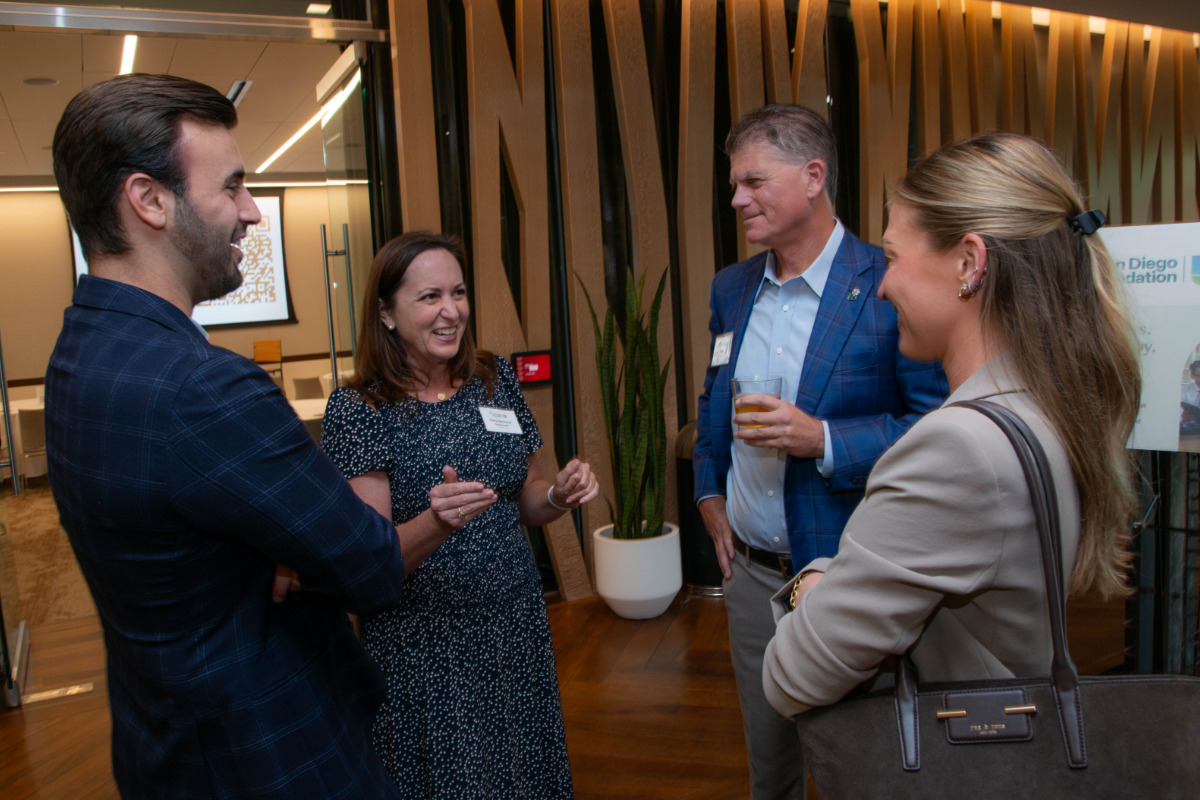
Wednesday, October 7, 2026
12:30 to 5:30 p.m. PT
Farmer & The Seahorse – The Americana Room
San Diego, CA
Two hours of continuing education credit available (MCLE, CFP®, CPE and PFEC). Lunch and parking provided.
Fall planning is underway, and clients may be revisiting estate plans, year-end strategies and the mix of assets they hold. This month, San Diego Foundation (SDF) is sharing three practical ways to support those conversations.
First, a simple estate planning question can open the door to a deeper discussion about charitable goals, family and legacy. Second, government securities require more precision than the label suggests: Marketable Treasury securities and savings bonds can present very different transfer and tax considerations. Third, recent coverage of liquidity events, donor-advised funds, complex assets and Qualified Charitable Distributions points to a broader opportunity for advisors to help clients connect their wealth with what matters most.
As always, SDF can serve as a charitable planning resource while you and your clients’ legal, tax and financial professionals guide the overall plan.
- Go Beyond the First Charitable Question
- Government Securities: Start With the Asset
- Reading Roundup: Trends Behind Client Conversations
Go Beyond the First Charitable Question

National Estate Planning Awareness Week will take place October 19–25, 2026. The observance dates back to a 2008 U.S. House of Representatives resolution intended to raise awareness of estate planning and its role in financial well-being. Charitable giving was included in the resolution as an important estate planning consideration.
For attorneys, CPAs and financial advisors, the week is a timely reminder to ask clients a direct question:
“Are there charitable causes you would like to include in your estate plan?”
Those 13 words can start an important conversation. Recent research, however, suggests that clients may want their advisors to go further.
According to the 2026 TPI Study of the Philanthropic Conversation:
- 80% of high-net-worth clients agreed that advisors have an obligation to engage them in conversations about charitable activity.
- 93% of clients who had discussed philanthropy with an advisor considered the advisor’s role important.
- While 99% were satisfied with those discussions, only 61% were very satisfied.
The findings point to a meaningful opportunity for advisors to deepen the discussion rather than treat charitable giving as a brief estate planning checklist item.
A “yes” to the initial question can lead to several useful follow-ups:
- Which causes, organizations or community issues matter most to you?
- Would you like your charitable support to continue beyond your lifetime?
- Should children, grandchildren or other family members have a role in carrying out your charitable intentions?
- Are there particular assets that may be better suited for charitable purposes than for individual beneficiaries?
- How would you like your charitable plans to adapt as family circumstances and community needs change?
These questions shift the conversation from whether a client wants to give to what the client wants that giving to accomplish.
Even clients who do not describe themselves as philanthropists may welcome the opportunity to discuss their charitable intentions. Depending on the client’s goals, possible approaches might include a bequest to one or more nonprofit organizations, a fund at SDF or naming a qualified charitable organization as the beneficiary of retirement assets. Each option should be evaluated as part of the client’s broader legal, tax and financial plan.
San Diego Foundation can join the conversation as a sounding board. Our team can help you and your client consider giving vehicles, succession options and charitable approaches that reflect the client’s intentions while you continue to lead the overall advisory relationship.
The first question matters. Listening closely to the answer, and knowing which questions to ask next, can make the conversation far more valuable.
Government Securities: Start With the Asset

When a client wants to make a gift of appreciated assets, publicly traded stock may be the first option that comes to mind. A client’s portfolio, however, may contain other investments that warrant consideration.
Government securities are one example. The category can include Treasury bills, Treasury notes, Treasury bonds, Treasury Inflation-Protected Securities, Series EE and Series I savings bonds and securities issued by federal agencies or government-sponsored enterprises. These holdings can differ significantly in how they generate income, whether they are marketable or transferable, how they are valued and how their returns are taxed.
The practical lesson for advisors is straightforward: Identify exactly what the client owns before discussing a charitable strategy.
Marketable Treasury securities require a closer look
Some marketable Treasury securities may be transferable to a charitable organization, but advisors should not assume that the result will mirror a gift of appreciated publicly traded stock.
A Treasury security’s holding period, basis, fair market value and type of return can all affect the analysis. Treasury securities may generate taxable interest or original issue discount rather than the long-term capital appreciation associated with many stock-gift strategies. Transfer procedures and the charitable organization’s acceptance requirements also need to be considered.
For clients who are charitably inclined, this can be an opportunity to bring the charitable recipient and the client’s tax and legal advisors into the discussion before the client initiates a transfer.
Savings bonds present different lifetime-gift considerations
Series EE and Series I savings bonds generally accumulate federally taxable interest, and many owners defer reporting that interest until the bonds are redeemed or mature.
As a result, a straightforward lifetime gift involving savings bonds may not provide the same result as a direct gift of appreciated stock. If a client redeems savings bonds and then donates the cash, the client generally must recognize previously deferred interest. A proposed transfer of the bonds themselves also requires careful review.
This does not mean savings bonds should be excluded from charitable planning. It means the timing and context matter.
Estate planning may change the analysis
Savings bonds can become especially relevant when reviewing a client’s estate plan. Accrued savings bond interest can constitute income in respect of a decedent, or IRD. That characteristic can make savings bonds worth discussing when a client is deciding which assets to leave to individual beneficiaries and which assets might support charitable goals.
The appropriate approach will depend on the client’s circumstances and should be reviewed by the client’s tax and legal advisors.
A practical checklist for advisors
When government securities surface in a charitable planning conversation:
- Identify the exact security. Confirm whether the client owns a marketable Treasury security, a savings bond or another type of government-related investment.
- Determine whether it can be transferred. Review the security’s transfer rules and confirm whether the intended charitable organization can accept it.
- Examine how the return is generated. Interest, original issue discount and appreciation can lead to different tax considerations.
- Compare lifetime and estate planning options. A strategy that is not well suited for a lifetime gift may still deserve attention in an estate plan.
- Coordinate before the client acts. Redemption, sale or transfer may affect the available planning options.
San Diego Foundation can work alongside you and your client’s other advisors to explore whether an asset can be accepted and how the charitable portion of a potential gift might be structured. An early conversation gives everyone more time to assess the asset and avoid unintended results.
Reading Roundup: Trends Behind Client Conversations

Recent coverage illustrates how often charitable planning intersects with broader wealth management conversations. Liquidity events, rapidly created wealth, donor-advised funds, business transitions, hard-to-value assets and retirement accounts all can create opportunities for advisors to raise charitable questions.
New wealth and liquidity events
Tech millionaires are turning to donor-advised funds to save on taxes while giving to charity
– CNBC
Newly wealthy technology employees may hold appreciated company stock after an IPO or another liquidity event. The article reinforces the value of discussing charitable planning before a transaction is underway, when clients and their advisors may have more options available.
Chickens, Pigs Could Be Big Winners From AI’s $300 Billion Philanthropy Wave
– Forbes
Rapidly created wealth in the artificial intelligence sector is also shaping how a new generation approaches philanthropy. For advisors, the practical opportunity is to help clients move from a sudden increase in wealth to a deliberate plan that reflects their goals and interests.
How Advanced Charitable Exit Planning Drives AUM Growth
– Financial Advisor Magazine
Business exits are another important planning moment. Raising charitable questions well before a sale may help clients consider gifts of business interests, donor-advised funds, charitable trusts and other approaches as part of a coordinated transition plan.
Across all three articles, the common thread is timing. IPOs and business sales can move quickly, and some charitable options may become more limited after a transaction has advanced.
Donor-advised funds and the broader planning toolbox
Philanthropic Planning Is Wealth Management’s Next Competitive Frontier, Beyond DAFs
– InvestmentNews
Donor-advised funds are important, but they are not the entire charitable planning toolbox. Clients may also need help considering charitable trusts, planned gifts, family involvement and other structures that support lifetime and legacy goals.
Five Core Truths About Donor-Advised Funds
– WealthManagement.com
This article addresses common misconceptions about donor-advised funds and examines their role in organizing giving, accepting complex assets and supporting charitable succession planning.
Donor-Advised Fund Strategies for 2026
– Financial Advisor Magazine
Rather than treating a donor-advised fund only as a destination for a year-end contribution, advisors can help clients coordinate the timing, assets and purpose of their giving with the rest of their financial plans.
For clients who are charitably inclined, the opportunity is to begin with their goals and then identify the vehicle or combination of vehicles that best supports those goals. SDF offers donor-advised funds as well as other fund types and charitable planning resources.
The pace and purpose of giving
Most Billionaires Practice ‘Slow Philanthropy.’ MacKenzie Scott Is a Major Exception
– Fortune
The article raises a question that applies beyond ultra-high-net-worth philanthropy: What helps clients become comfortable putting charitable resources to work? Effective planning is not only about establishing a structure. It is also about helping clients define their goals and determine an appropriate pace for acting on them.
Dolly Parton’s Other Legacy: A Fortune Given Away, Dollar by Dollar
– The New York Times
A profile of practical, personal giving offers another useful reminder. A charitable plan does not need to begin with a complicated structure. It can begin with a clear understanding of the people, places and issues a client cares about.
These stories reinforce the value of discussing purpose alongside technical planning.
Complex assets and documentation
IRS Eyes Charitable Donation Abuse in New Audits, Tax Pros Say
– Bloomberg Law
Hard-to-value assets such as privately held business interests and art require careful coordination. Valuation, qualified appraisal and substantiation requirements are central to the deductibility analysis, and clients should involve their tax and legal advisors before completing a gift.
San Diego Foundation can help assess the charitable acceptance and administration considerations while the client’s professional advisors address valuation, documentation and tax reporting.
Retirement assets and QCDs
Retirees Over 70½ Can Send $111,000 a Year From an IRA to Charity Tax-Free. The Average One Donates From Checking Instead.
– 24/7 Wall St.
A client may have a long history of writing checks to favorite nonprofits without considering whether another account could be more appropriate. For eligible IRA owners, a Qualified Charitable Distribution may provide a more tax-efficient way to support the same organizations.
The 2026 QCD limit is $111,000 per taxpayer. QCDs cannot currently be directed to donor-advised funds, but eligible distributions may support certain designated, field-of-interest and unrestricted funds at SDF. Advisors should confirm eligibility and coordinate the distribution with the client’s IRA administrator and tax advisor.
The larger takeaway from the reading roundup is that charitable planning opportunities can surface almost anywhere. An IPO, business exit, estate plan, concentrated asset or IRA distribution can prompt a broader discussion about what a client wants to give, when the client wants to give and what the client hopes that generosity will accomplish.
SDF is available as a resource whenever those conversations arise.
Learn More
For more than 50 years, we have worked with an extensive network of wealth advisors, estate planning attorneys, tax planners and other financial advisors to help high-net-worth clients and families achieve financial planning objectives and charitable giving goals while maximizing tax deductions.
If you want to learn more about customizing charitable solutions that match your clients’ needs, contact me at (858) 245-1508 or [email protected].