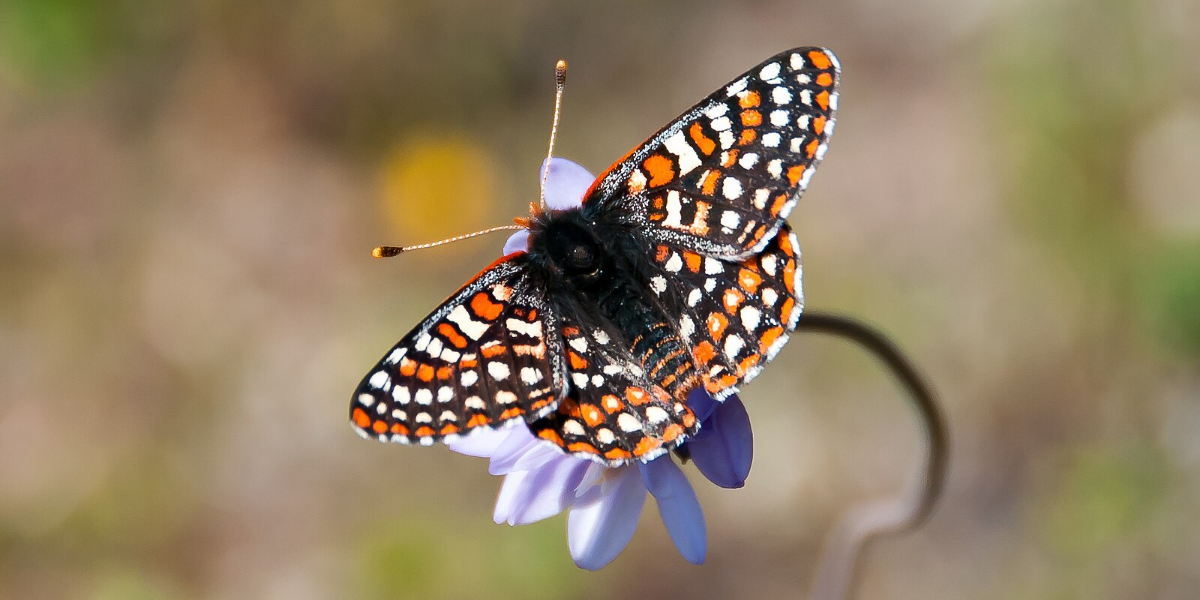
Quino checkerspot butterfly on a wild hyacinth. (Photo Credit: Andrew Fisher/U.S. Fish and Wildlife Service Volunteer Biologist)
Thousands of acres of conserved and/or preserved land in San Diego is protected using funds from environmental mitigation agreements.
San Diego Foundation (SDF) holds the mitigation funds in a protected endowment in perpetuity, so that environmental and community nonprofits will always have access to money to support monitoring and managing the conserved and/or restored lands over time.
While many San Diegans appreciate these conservation outcomes where they can recreate, few know how these special places were protected.
Through our “Conservation Legacies” series, we’re honoring several of the key individuals who brought these projects to life.
This work aligns closely with the Environment focus area of Fifty & Forward, SDF’s multi-year fundraising and grantmaking campaign to support future leaders, strong families and healthy environments while raising $1 billion to help shape San Diego’s future.
Candace Wo: Tell us about your role. What do you do regarding environmental mitigation, conservation, or restoration?
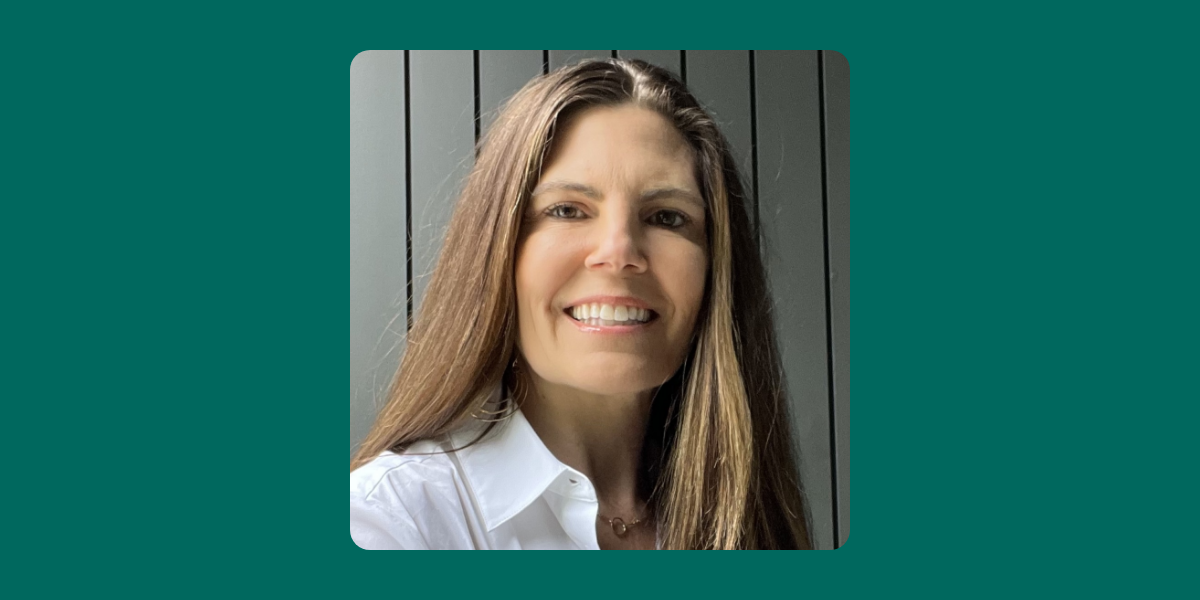
Susan Wynn: I am a biologist within the US Fish and Wildlife Service (USFWS) Ecological Services program in Carlsbad. Our office helps lead conservation across southern California and administers the Endangered Species Act (ESA). Our goal is to use the best available science to restore and protect healthy populations of fish, wildlife, and plants and the environments upon which they depend.
We work with federal, state, Tribal, local, and non-profit stakeholders and private landowners to avoid, minimize, and mitigate threats to our nation’s natural resources.
I oversee a team of seven who work predominantly under sections 7 and 10 of the ESA. This includes reviewing environmental documents, making suggestions to avoid and minimize impacts, and issuing permits or biological opinions as appropriate, where impacts cannot be fully avoided. One of our office’s primary focuses is working with our local partners on the development and implementation of regional habitat conservation plans.
My favorite days are when our team gets out into the field. Lately, my division has been working closely with biologists from the San Diego Zoo and San Diego Management and Monitoring Program (SDMMP) on the recovery of sensitive butterflies, including the federally listed endangered Quino checkerspot butterfly and Laguna Mountains skipper, the federally listed threatened Hermes copper butterfly, and the sensitive Harbison’s dun skipper.
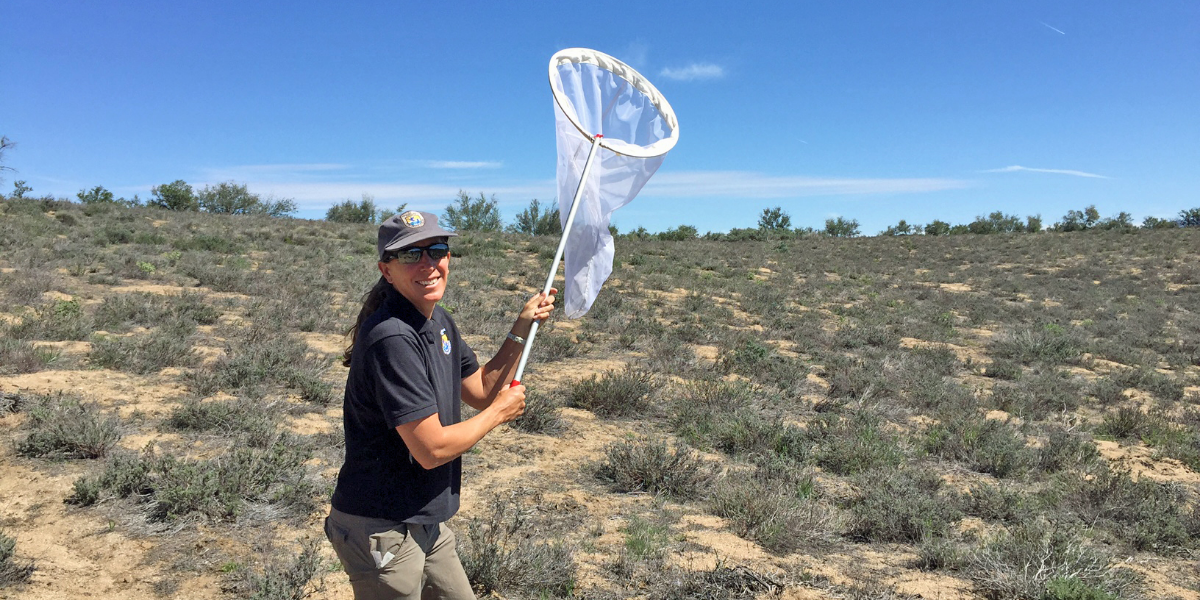
Susan Wynn collecting founding members of the Quino checkerspot butterfly Reinforcement Project in San Diego County. (Photo Credit: U.S. Fish and Wildlife Service)
CW: What or who inspired your career?
SW: I found a love of the outdoors early. My family did a lot of camping when we were kids, so I was exposed to the outdoors early and often.
My grandfather was an avid fisherman, so he would often bring home salmon, which my grandmother would then cook or smoke. I often “helped” prepare the fish. There’s a picture of me when I was very young, dissecting a salmon he had caught on my grandparents’ kitchen floor. Perhaps that was the start of my interest in biology.
During college, I worked for the University of California Natural Reserve System. My first exposure to land management was with the University of California, San Diego, where I received both a BA and MS. I started in the Carlsbad Field Office for the Service in April 1992. My first job with the Service was in Federal projects, which included biological surveys on local military bases and reviewing Army Corps of Engineers permits for wetlands and vernal pools.
I slowly moved up the ranks, focusing more on regional planning, which is where I am today.
CW: We’re sharing some of the conservation and restoration milestones we’ve accomplished together in the past 15 years. What impact or project are you most proud of?
SW: We have many sites now where the land is secure, and thanks to environmental mitigation funds, we have some funding for long-term management and monitoring (although it’s not enough). That’s a win.
For example, burrowing owls were once widespread throughout the grasslands here, but were reduced to only one breeding population in Otay Mesa. Over the past 20 years, I’ve worked with the County of San Diego and the California Department of Fish and Wildlife to establish the Otay Mesa Grassland Mitigation Fund at the SDF to increase, stabilize, monitor, and manage the burrowing owl population in San Diego County.
Funding for these activities often comes from mitigation funds to offset the development’s impact on the owls and their habitat.
Today we have three population nodes established: Otay Mesa, Rancho Jamul, and Ramona Grasslands. We’ve built a stong collaboration, including San Diego Zoo Alliance which implements most of the research, captive breeding, reintroduction programs, and monitoring, CDFW which manages Rancho Jamul, San Diego Habitat Conservancy which manages portions of Otay Mesa and Ramona, and SDF which manages the money.
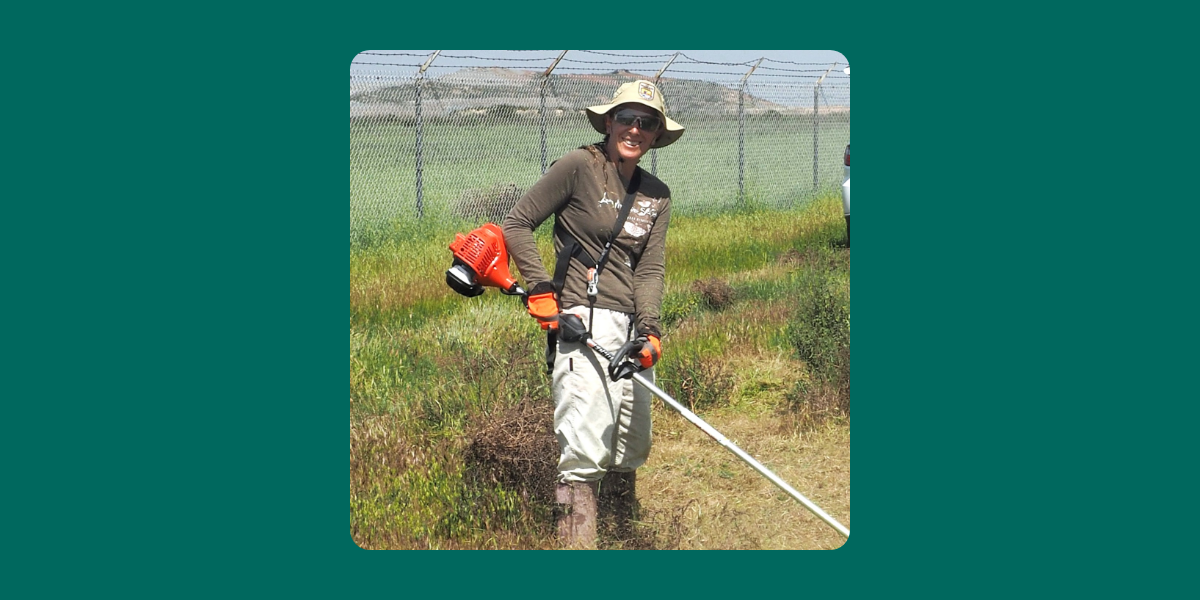
Susan weeding to enhance artificial burrows for the burrowing owl at Caltrans Lonestar Preserve in Southern California. (Photo Credit: U.S. Fish and Wildlife Service)
CW: What do you trust SDF to do when it comes to environmental endowments?
SW: We trust SDF to manage the money effectively and to help the partners ensure we can fund the care for these efforts well into the future. We turn to SDF to understand how we set up the endowment for success and how the money gets invested. We discuss how we think about rates of return, and even inflation. All of these pieces of the puzzle are important when we set up a project.
CW: What keeps you hopeful?
SW: The people – this group of practitioners – with its diversity of expertise and the momentum we’ve created. I am confident our partnerships and collaborations will have staying power.
When we bring region-wide planning together with environmental mitigation to secure the land for conservation, skilled partners for monitoring and managing the habitat and the finances, as well as out-of-the-box collaborations for research and science, we see something really special and measurably impactful evolve.
We’ve seen positive movement in terms of recovery for species such as the least Bell’s vireo and Stephen’s kangaroo rat, and we are hopeful that some of our actions may prevent the need to list additional species as endangered.
I also get hope from the next generation of biologists entering the workforce. They are smart, passionate, and have new ideas to explore. We need to pass on our institutional knowledge to them so that they can pick up where we leave off.
CW: Anything else you’d like to share about these projects and this collaboration?
SW: I’d like to highlight our work with SANDAG’s Regional Habitat Conservation Taskforce and the San Diego Management & Monitoring Program (SDMMP) on implementing our regional plans. The resulting collaboration is unprecedented.
SDMMP has developed a science-based Management and Monitoring Strategic plan for conserved lands in San Diego County. This work is currently funded by TransNet, a local half-cent regional sales tax. Unfortunately, this funding will run out soon. It is critical that we identify a new funding source to keep this amazing program up and running.