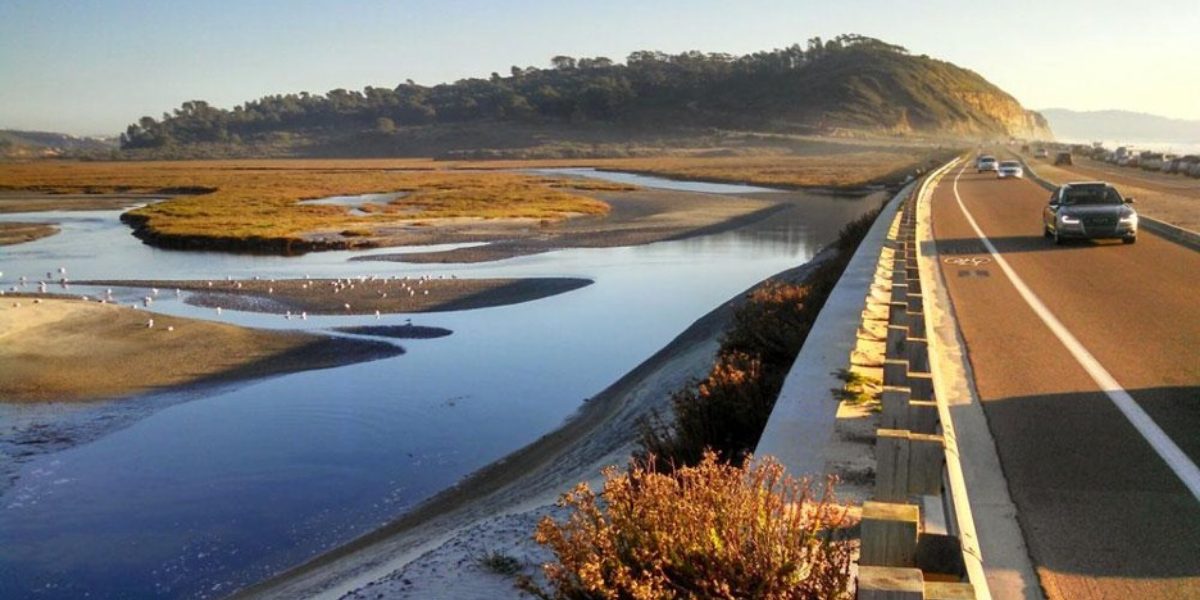
SANDAG manages TransNet, which supports conservation and restoration efforts resulting from infrastructure projects like roads and bridges across the San Diego region. Pictured above: Los Penasquitos Lagoon. (Photo Credit: Los Penasquitos Lagoon Foundation)
More than three million people live in the San Diego region, including the County of San Diego, 18 cities, and 17 federally recognized tribes. We share our southern border with Mexico, the largest trading partner to both the United States and the state of California. With such a large and diverse region, we need plans for our infrastructure – from our roads and beaches to our open space –and an open dialog that connects jurisdictions planning for growth.
Through the San Diego Council of Governments (SANDAG),more than 9,200 acres of land across 40 sites in San Diego has been conserved or restored using funds that support environmental mitigation. Often, land conservation comes with an endowment that ensures care for the land over time. That’s where we come in. San Diego Foundation (SDF) holds the mitigation endowments in a dedicated fund that can support restoration and monitoring of the land in the future.
While many San Diegans appreciate these conservation outcomes where they can recreate, few know how these special places were protected. Through our “Conservation Legacies” series, we’re honoring several of the key individuals who brought these projects to life.
This work aligns closely with Fifty & Forward, SDF’s multi-year fundraising and grantmaking campaign to support education, children & families and healthy environments while raising $1 billion to help shape San Diego’s future.
Candace Wo: Can you describe your role as it relates to environmental mitigation, conservation, or restoration?
Keith Greer: I’m the deputy director of environmental compliance and climate at SANDAG (San Diego Association of Governments). Our team focuses on planning so that our projects can protect wetlands, lagoons, wildlife habitat, coastal resources, endangered species, water quality and our region’s quality of life.
I grew up in San Diego. I was a biology major in college, working for engineering firms, focused on environmental compliance. My passion is a mix of planning and biology. Early in my career, I watched as so many cities, including the city of San Diego, developed plans for greenfield development – essentially changing green areas into cities. As our region continued to grow, we began to look at our natural resources, including clean and recycled water. Eventually, we started to consider incorporating the environment and open space into our broader plans, and managing endangered species and habitat like we do for other infrastructure, including roads.
CW: Can you share a bit more about what SANDAG does related to the environment?
KG: SANDAG is responsible for developing plans for how people and goods will move around the region. This includes planning and building infrastructure, preserving the environment, providing local resources and overseeing the TransNet Environmental Mitigation Program (EMP), which was designed to protect and conserve the environment while responsibly delivering critical transportation infrastructure.
TransNet includes a regional half-cent sales tax for transportation and conservation approved by San Diego County voters. Through it, SANDAG purchases, conserves and restores native habitat to offset potential impacts from the development of transportation projects.
To date, the TransNet EMP has helped acquire or restore 9,215 acres of valuable open space in partnership with other government agencies and conservation groups. The program has also provided 130+ grants to local organizations and jurisdictions for land management that help protect rare plant and animal species.
It’s a really cool model because it allows for conservation in advance of the environmental impact, which allows us to partner strategically and scale our impact. We were one of the first regions in the United States to create a funding tool like TransNet EMP. Orange County modeled their approach to transportation planning soon after.
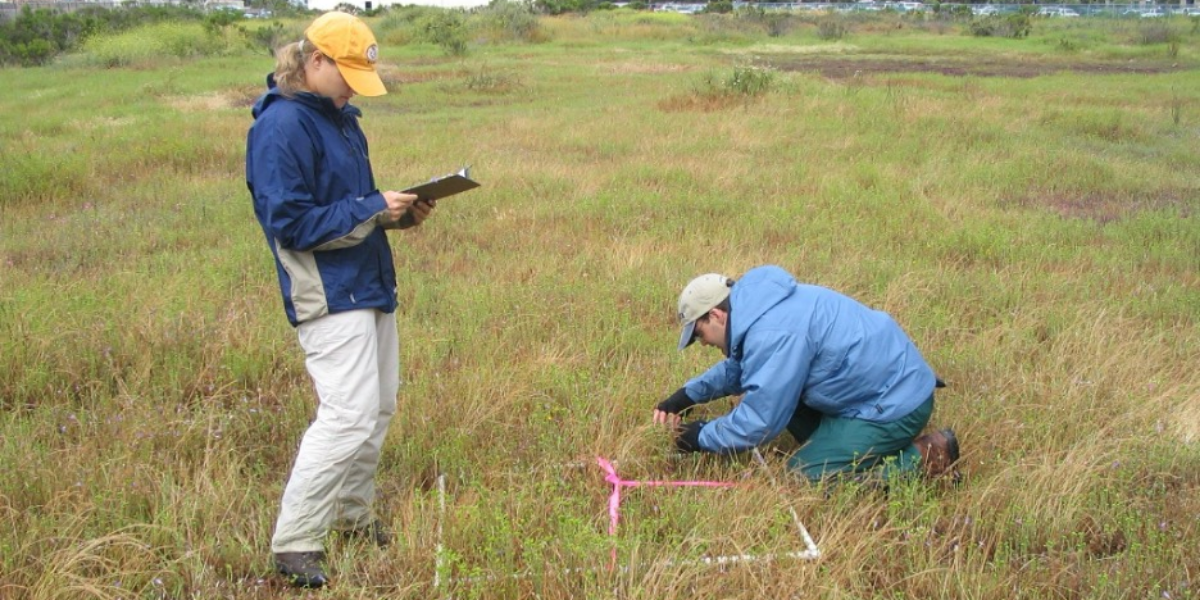
Biologists Holly Cheong and Keith Greer monitor rare plant species. (Photo Credit: Keith Greer)
CW: What, or who inspired your career?
KG: I was good at science and math in high school, and interested in the oceans and the back country areas of San Diego. I had a teacher in high school focused on marine biology. We connected about what would be possible for me in college, and I jumped. I found my way to California State University, Long Beach.
When I came back to the San Diego region after college, all of the open space and sage fields we used to pass on the bus on our way to school were developed. That really struck me. I got interested in environmental conservation and the connections between the impact of science and policy to promote action.
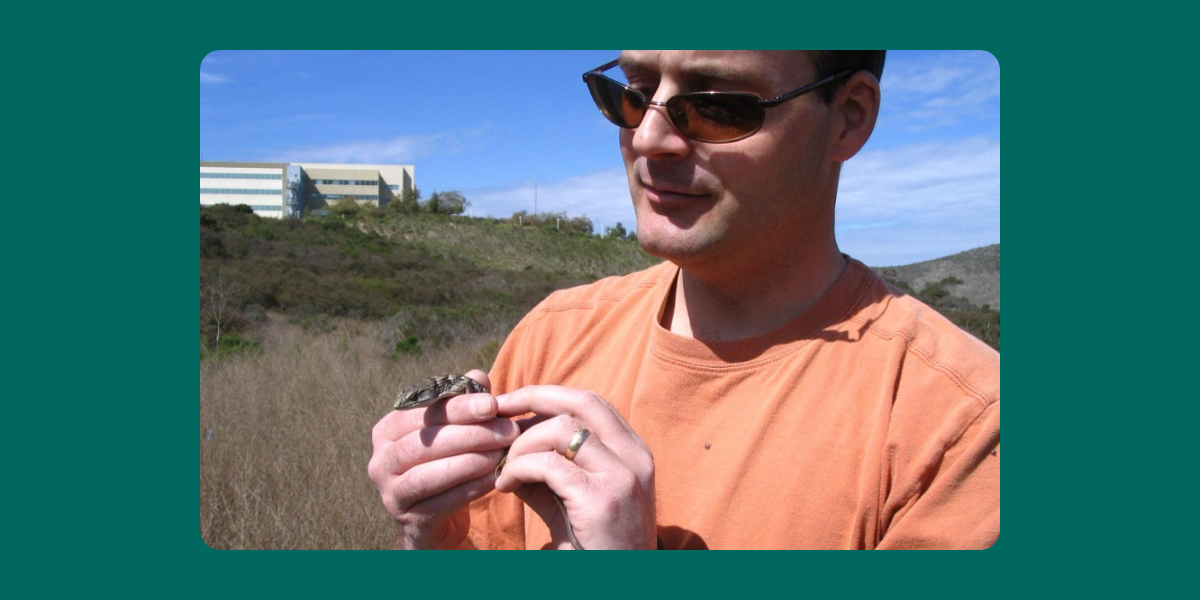
Keith Greer holding a San Diego alligator lizard. The species is native to the Pacific coast of North America and ranges from Baja California to the state of Washington. (Photo Credit: Keith Greer)
CW: We’re sharing some of the conservation and restoration milestones we’ve accomplished together in the past 15 years. What impact or project are you most proud of?
KG: I’m most proud of looking across San Diego and seeing the open space areas that I’ve helped to conserve. Many residents take for granted the time and effort it takes to conserve and maintain these areas for the enjoyment of San Diegans.
I’m also proud of our approach to collaboration. We have a multi-jurisdictional task force that meets every other month and plans for how we will manage habitat, conservation and the monitoring of our impact over time as a region. We were one of the first groups in the nation to create a system to develop and implement a plan with a funding source to conserve and monitor interconnected areas for hiking, recreation and endangered species. These parks and open space areas are now part of San Diego’s legacy.
To keep that legacy alive, we need to plan for it, and we need a reliable funding source to sustain it and monitor its success.
CW: What do you trust SDF to do when it comes to environmental endowments?
KG: SDF has been there from the get-go. They are a trusted and reliable entity, and open to rolling up their sleeves to figure out the best process for our goals. They play a pivotal role in engaging conservation and philanthropy partners to determine how the funds can stay local to our communities and make the biggest impact over time. We also appreciate SDF’s help to ensure the funds are held safely and managed properly, so they will be accessible for conservation and monitoring.
CW: What challenges is your team facing now?
KG: We have two big challenges ahead.
We have two large-scale regional plans that are pending, and have been pending for more than two decades. We should collaborate to get those plans approved.
It’s critical that we find a regional funding source for the long-term management and monitoring of the lands we’ve conserved. We have only three years of TransNet funding remaining before the money set aside for the measurement and monitoring work of our habitat conservation efforts is depleted.
CW: What makes you hopeful?
KG: I hope my grandkids’ grandkids will have access to the same parts of San Diego I’ve come to love. They’d be able to enjoy our conifers, foothills, coastal environments, parks and open space.
I’m a biologist by training. I believe in preserving whole landscapes, not just one species at a time. If we can plan, conserve and maintain a system of native habitat areas, we can handle some changes. For example, if we lose a population of rare bird species in one area, if we’re doing this conservation and restoration right, it could come back in another place nearby. This will be especially important in light of a future climate change and the extreme temperatures and weather events that are predicted.
For our younger generations, we haven’t solved the problem yet, but I hope they will have access to the resources they need to work on it. It’s been exciting seeing this all come to fruition, and to learn from each other about how we want to be together in the future. When I was just starting my career, I was fortunate enough to learn from many other “old timers” about changes they’ve seen, and what their experiences have been. I have tried to bring forward what I have learned and to pass it along to those just starting their careers. Every generation has a unique perspective and approach towards conservation, and that’s a good thing.